
UK business owner comparing a freelance WordPress developer vs agency quote with a developer at a desk

Hire a Freelance WordPress Developer vs Agency: What UK Businesses Should Know

Quick answer: For most UK small businesses, a freelance WordPress developer vs agency decision comes down to project size and risk tolerance. Freelancers cost 40–60% less and suit defined, single-scope projects. Agencies cost more but bring a full team, which pays off on complex, multi-part builds with tight deadlines.

I get asked this question almost every week. A UK business owner has a WordPress project, two quotes on the table — one from a freelancer, one from an agency — and no clear way to compare them beyond the number at the bottom.

What’s the Real Difference Between a Freelancer and an Agency?

A freelancer is one person handling design, development, testing, and communication. An agency is a team, usually two to six people, splitting those roles across specialists.

That structural difference explains almost everything else. Freelancers work faster on small tasks because there’s no handoff between people. Agencies work faster on complex builds because multiple specialists move in parallel instead of one person doing everything in sequence.

How Much Does a Freelance WordPress Developer Cost in the UK?

UK freelance WordPress developer rates typically run £35–£85 per hour, based on current Upwork UK data. For a full project rather than an hourly rate, expect £1,000–£5,000 for a custom-built small business site, depending on experience and scope.

Agencies charge more. A UK brochure site from a professional agency usually starts around £3,000 and can reach £8,000 or more for a 5–15 page site with custom design. That premium isn’t padding — it pays for a project manager, a dedicated designer, and QA testing running alongside the build.

As a rough rule, agencies charge 50–100% more than freelancers for comparable work. Whether that’s worth it depends entirely on what you’re building.

When Should You Hire a Freelancer Instead of an Agency?

Choose a freelancer when your project has a clear, bounded scope. Think: a new theme, a WooCommerce store setup, a site migration, or ongoing maintenance on an existing build.

You also get one real advantage that agencies can’t fully replicate: direct access to the person actually writing your code. No account manager relaying messages, no waiting for updates to trickle down a chain. That matters more than people expect once a project hits a snag.

The trade-off is availability. If your freelancer gets sick, takes another project, or simply goes quiet, your build stalls. You’re also the de facto project manager — coordinating timelines and reviewing work yourself, because nobody’s doing that for you.

When Does an Agency Actually Make More Sense?

Agencies earn their premium on projects with multiple moving parts happening at once — say, a WooCommerce store that also needs custom design, copywriting, and a tight launch date.

Here’s the part most cost comparisons miss: a freelancer charging £40/hour who takes 120 hours to finish a project can end up costing more than an agency charging £70/hour that completes the same scope in 50 hours through parallel work. Hourly rate alone is a misleading comparison once a project gets complex enough to benefit from a team working simultaneously rather than one person working through a list.

Agencies also tend to offer stronger contractual protections — warranties, service level agreements, and built-in backup if a team member is unavailable. For a business-critical site, that safety net is often worth paying for.

What UK Businesses Need to Know About IR35

This is the part that catches UK business owners off guard, and it’s genuinely worth five minutes of your time before you sign anything.

IR35, officially the off-payroll working rules, exists so that contractors who effectively work like employees pay similar tax to employees, even when they operate through a limited company. According to GOV.UK’s official guidance, the rules apply on a contract-by-contract basis and depend heavily on how the working relationship actually functions, not just what the contract says.

Here’s the good news for most small businesses reading this: if you’re classed as a small company under the Companies Act, responsibility for determining IR35 status sits with the contractor’s own limited company, not with you. And from 6 April 2026, the turnover threshold for “small” rises to £15 million — so more businesses fall into this simpler category, not fewer.

For a genuine project-based engagement — you brief a developer, they deliver a finished WordPress site on their own schedule using their own equipment — IR35 concerns rarely apply in practice. It starts to matter more if you’re engaging a freelancer full-time, long-term, dictating their hours, and treating them functionally like an employee. If that sounds like your situation, it’s worth a conversation with an accountant before you commit to a structure.

A Nuance Most Guides Skip: Vetting Matters More Than the Label

“Freelancer” and “agency” aren’t quality tiers. I’ve seen freelancers deliver better, cleaner code than agencies charging three times as much, and I’ve seen the reverse. The label tells you about team structure and support, not skill.

Before you hire either, ask for actual code samples or a GitHub link, not just a portfolio of finished sites. Finished sites show design outcomes. Code shows how someone actually builds. If the project involves WooCommerce or anything AI-related, ask directly whether they’ve shipped something similar before — vague reassurance isn’t the same as evidence.

Freelancer, Agency, or Something in Between?

There’s a middle path worth knowing about: a single experienced full-stack freelancer who covers WordPress, WooCommerce, and integrations like Wix Velo, without agency-level overhead. That’s often the practical answer for UK small businesses that need production-grade work without a five-figure agency invoice.

WordPress still powers roughly 42% of all websites globally, according to W3Techs’ market share data, so the pool of people who “do WordPress” is enormous. Narrowing that pool by experience and project fit matters more than narrowing it by freelancer-versus-agency alone.

If you’re still unsure which platform or hiring model fits your project, the Platform Finder Quiz takes two minutes and gives you a clearer starting point. You can also run your project through the Free Website Cost Calculator to get a realistic budget range before you request quotes.

Frequently Asked Questions

Is a freelance WordPress developer cheaper than an agency in the UK?
Yes. UK freelancers typically charge £35–£85/hour and £1,000–£5,000 per project, while agencies charge 50–100% more for comparable work due to team overhead.

Does IR35 apply to a small UK business hiring a freelance developer?
Usually not directly. If your business qualifies as small under the Companies Act, the contractor’s own limited company is responsible for determining IR35 status, not you.

Are agencies faster than freelancers for WordPress projects?
For complex, multi-part projects, often yes, because specialists work in parallel. For small, defined tasks, freelancers are usually faster since there’s no handoff between team members.

What’s the biggest risk of hiring a freelancer instead of an agency?
Availability. A freelancer is one person, so illness, other commitments, or unresponsiveness can stall your project with no built-in backup.

Can a freelancer handle a WooCommerce store on their own?
Yes, many freelancers specialise in WooCommerce builds. Ask for examples of live stores they’ve built and check post-launch support is included.

Should I choose based on price or portfolio when comparing freelancers and agencies?
Portfolio and code samples matter more than price alone. A higher rate with proven, relevant experience is often better value than a lower rate with an unverified track record.

Not Sure Which Fits Your Project?

If you’d rather skip the guesswork and talk through your specific project, message me on WhatsApp and I’ll give you an honest read on what it actually needs — no pressure, no generic sales pitch.

Core Web Vitals Optimization Service | Fix LCP, INP & CLS

Core Web Vitals 2026: LCP, INP & CLS Explained (Full Guide)

Quick answer: Core Web Vitals are three Google metrics measuring real user experience: Largest Contentful Paint (LCP, loading speed, good under 2.5 seconds), Interaction to Next Paint (INP, responsiveness, good under 200 milliseconds), and Cumulative Layout Shift (CLS, visual stability, good under 0.1). They’re a confirmed Google ranking factor — not the dominant one, but increasingly a real filter rather than just a tiebreaker in 2026. Most sites still fail at least one metric, especially INP, which is now the hardest to pass.

If your site “feels slow” but you’re not sure why — or you’ve heard Core Web Vitals matter for SEO but don’t know what to actually fix — this is the full picture, using real 2026 data.

What Each Metric Actually Measures

The three Core Web Vitals are Largest Contentful Paint (LCP), which measures loading speed with a “good” threshold of under 2.5 seconds; Interaction to Next Paint (INP), which measures responsiveness with a “good” threshold of under 200 milliseconds; and Cumulative Layout Shift (CLS), which measures visual stability with a “good” threshold of under 0.1. All three must be passing at the 75th percentile of real visitor data for a page to achieve an overall “good” Core Web Vitals assessment. ScribdScribd

In plain terms:

  • LCP — how long until the biggest visible thing on your page (usually a hero image or headline) finishes loading
  • INP — how fast your site responds when someone actually clicks, taps, or types
  • CLS — whether things jump around on screen while the page loads (a button shifting right just as someone taps it)

Why INP Is the One Tripping Up Most Sites in 2026

This is the metric that changed the game. Interaction to Next Paint replaced First Input Delay in March 2024 and measures interactivity by tracking how quickly a page responds to every user interaction — clicks, taps, and keyboard inputs — not just the first one. WebMD

The difference matters more than it sounds. First Input Delay only measured the delay before a browser could begin processing the very first interaction on a page — a single data point that told you almost nothing about overall responsiveness — while INP captures every interaction throughout the full page lifecycle and reports the worst one at the 75th percentile, making it far harder to game. Yoast

The result: 43% of sites still fail the 200ms INP threshold, making it the most commonly failed Core Web Vital in 2026. If your site passed Core Web Vitals a couple of years ago and you haven’t checked since, there’s a real chance it’s failing now on this metric alone. Yoast

Is This Actually a Ranking Factor, or Just a Nice-to-Have?

The honest answer sits in the middle, and this has shifted in 2026. Historically, Core Web Vitals have been a real but modest ranking factor, with the bigger practical impact showing up in bounce rate, conversion, and AI-engine retrieval eligibility rather than rankings directly. One analysis of real engagements found the practical ranking effect is roughly 1 to 2 positions for pages that improve from “poor” to “good” across all three metrics — meaningful, but not transformative on its own. YoastYoast

But 2026 brought a shift worth knowing about. Following the March 2026 core update, performance has moved from functioning purely as a tiebreaker to acting more like a filter — if your metrics are in the red, even genuinely strong content can be pushed down in rankings. Supporting this, pages ranking in position 1 on Google show a measurably higher Core Web Vitals pass rate than pages sitting in position 9. Bicycle CouriersBicycle Couriers

Google’s own position, cited consistently across sources, is that Core Web Vitals can serve as a tiebreaker when two pages have similar content quality, and while content relevance remains the most important ranking factor, failing Core Web Vitals puts a site at a real disadvantage in competitive niches. Scribd

The Business Case: Why This Matters Beyond SEO

Even if you set rankings aside entirely, the user-behavior numbers make a strong case on their own. Pages loading in under 2 seconds show around a 9% bounce rate, while those exceeding 5 seconds see bounce rates explode to roughly 38%. More specifically, for every second of delay beyond the 2.5-second LCP threshold, bounce rates increase by roughly 32%, and a one-second delay in load time reduces conversions by about 7%. Bicycle CouriersBicycle Couriers

Put in real terms: for an e-commerce site generating $100,000 per month, that conversion drop translates to roughly $7,000 in lost revenue. Separately, sites that get all three metrics into “good” territory see a compounding benefit: passing all three Core Web Vitals thresholds correlates with 24% lower bounce rates alongside measurable ranking improvements. Bicycle CouriersYoast

How to Fix Each Metric

Fixing LCP (loading speed):
Image preloading, critical CSS inlining, font preloading with display swap, and server-side rendering are the four highest-impact fixes for slow LCP scores. In practice, this usually means: compress and modernize your images (WebP or AVIF format), avoid render-blocking scripts above the fold, and use a quality host — slow hosting makes passing LCP extremely difficult since server response time directly impacts loading speed. YoastWebMD

Fixing INP (responsiveness):
This is the harder one. INP demands a fundamental shift in how developers handle JavaScript — breaking long tasks, deferring non-critical work, yielding to the main thread during interactions, and minimizing DOM complexity. INP usually fails because of long-running JavaScript tasks, so unlike a caching fix for LCP, there’s no single plugin toggle that resolves it — it requires actual code-level attention. YoastYoast

Fixing CLS (visual stability):
Every image, video, iframe, and ad slot needs explicit width and height attributes, and font-display swap combined with reserved space for dynamic content eliminates most remaining layout shift sources. Yoast

Specific Fixes for WordPress Sites

If you’re running WordPress — which most small business sites are — the common failure points are well understood. WordPress sites benefit from performance plugins like WP Rocket or LiteSpeed Cache for caching and optimization, image optimization plugins like ShortPixel or Imagify, lazy loading plugins, and lightweight themes designed for performance, since WordPress sites commonly struggle with Core Web Vitals due to plugin bloat and heavy themes. WebMD

More bluntly: most WordPress Core Web Vitals problems come from three sources — cheap hosting, bloated themes, and too many plugins — and those three should be fixed before optimizing anything else. Yoast

We’ve covered this in more hands-on detail specific to a real project in our WordPress restaurant website speed-up case study.

Mobile Matters More Than Desktop Now

Mobile devices represent approximately 58% of all website visits in 2026, making mobile Core Web Vitals performance the primary factor in Google’s ranking algorithms, largely because Google has fully implemented mobile-first indexing, meaning mobile scores are what matter most for rankings. If you only have budget to optimize one version of your site first, make it mobile. MediumWebMD

How to Actually Check Your Scores

Use these tools, in this order of reliability:

  1. Google Search Console → Core Web Vitals report — shows real field data from your actual visitors, grouped by URL
  2. PageSpeed Insights — Google’s own tool, combining real-world field data with simulated lab testing for any URL
  3. Chrome DevTools Lighthouse — deeper technical, simulated lab testing

Field data from real visitors always carries more ranking weight than lab data from simulated tests, so treat Search Console as your source of truth over any one-off Lighthouse score. Yoast

How Long Fixes Take to Show Results

Don’t expect overnight movement. Google Search Console updates Core Web Vitals data based on 28 days of real user data, so after implementing fixes, expect to see metric improvements within 4-6 weeks, with ranking improvements often taking longer since Google’s algorithm weighs many factors beyond Core Web Vitals — most sites see measurable ranking changes within 2-3 months of sustained good scores. WebMD

Frequently Asked Questions

Do Core Web Vitals directly determine my Google ranking?
No — they’re one signal among many, acting mainly as a tiebreaker between pages of similar content quality, though 2026 data suggests failing badly can act more like a filter than before.

Which Core Web Vital is hardest to pass in 2026?
INP (Interaction to Next Paint), which requires deeper JavaScript-level fixes rather than a quick caching or image-compression solution.

Does site speed matter more on mobile or desktop?
Mobile, due to Google’s mobile-first indexing and mobile devices making up the majority of web traffic in 2026.

How quickly will fixing Core Web Vitals improve my rankings?
Metric improvements typically show in Search Console within 4-6 weeks; ranking changes often take 2-3 months of sustained good scores.

Can a WordPress site realistically pass all three metrics?
Yes, but usually only after addressing the three most common causes: cheap hosting, a bloated theme, and too many active plugins.

For a broader look at how performance fits into overall project budgeting and platform choice, see our complete website development cost guide.


Want your site’s Core Web Vitals audited and fixed properly? Contact us with your URL for a real diagnostic, not a generic checklist.

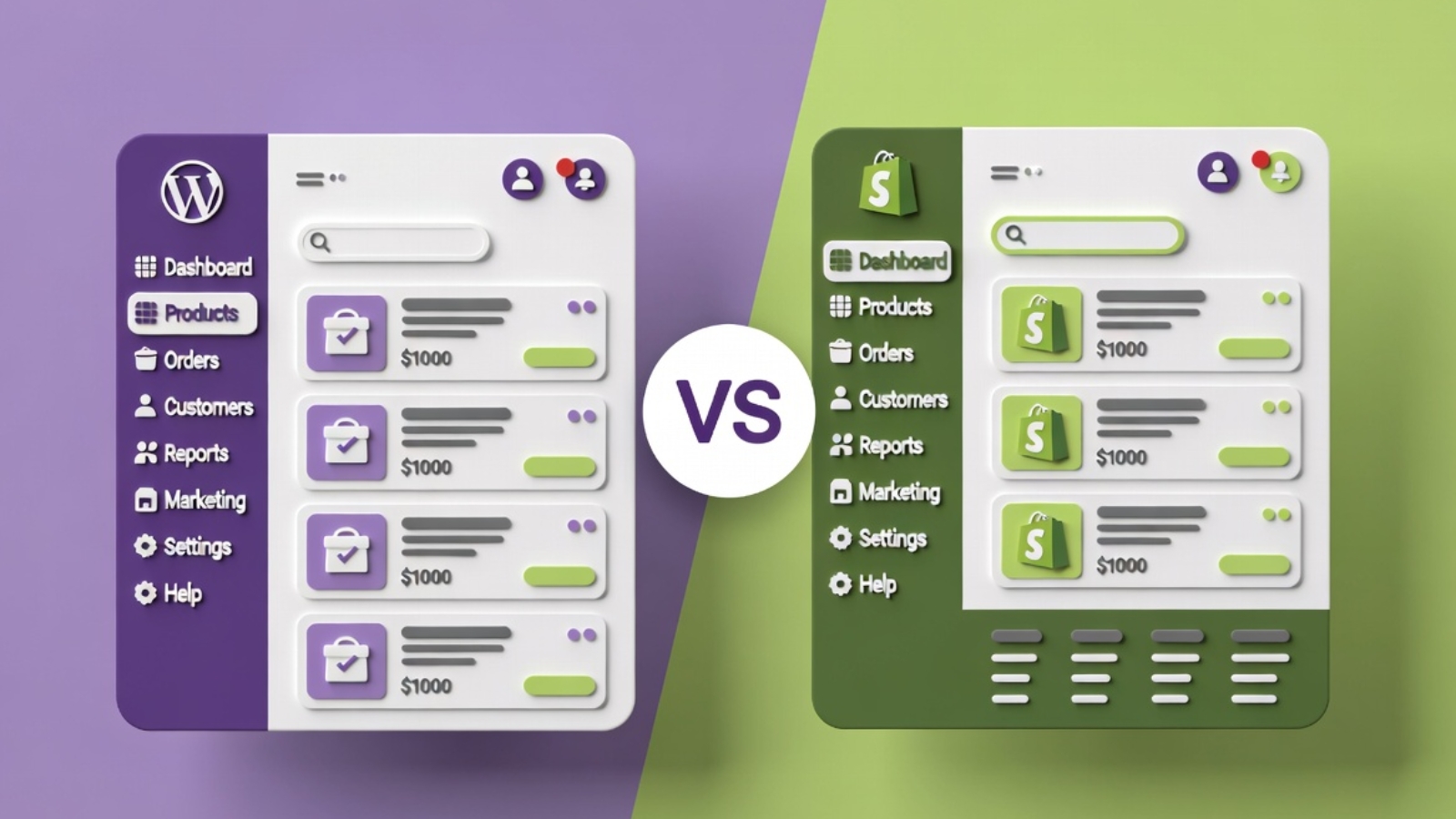
WooCommerce and Shopify e-commerce platforms compared side by side

WooCommerce or Shopify 2026: Which Should You Choose?

Quick answer: Choose Shopify if you want a fully hosted, low-maintenance store with built-in AI tools and fast setup, and don’t mind paying transaction fees or a fixed monthly plan. Choose WooCommerce if you want full ownership of your data, no mandatory transaction fees, and stronger long-term SEO and content control — in exchange for handling your own hosting and technical maintenance. Neither platform is objectively better; the right choice depends on your technical comfort, budget structure, and whether content marketing is core to your growth strategy.

If you’re planning an online store in 2026, this decision shapes years of your business — migrating later is expensive and disruptive. Here’s a grounded, current comparison based on real 2026 data.

The Fundamental Difference: Hosted vs Self-Hosted

Shopify is a hosted SaaS platform where you rent the infrastructure, the software updates automatically, and Shopify handles security, while WooCommerce is an open-source WordPress plugin where you own and operate every component yourself. This single architectural choice explains almost every other difference between the two platforms. PeekYou

Pricing: What Each Platform Actually Costs

Headline numbers are only part of the picture here.

Shopify’s pricing: Shopify pricing in 2026 runs from $39 per month for the Basic plan to $399 per month for Advanced, with Shopify Plus starting near $2,300 per month for enterprise volume, and annual billing reduces these prices by roughly 25%. But the subscription fee is rarely the biggest cost. For most merchants processing meaningful volume, payment fees and app costs exceed the plan fee itself, and transaction fees are the single most important cost difference between the two platforms. Specifically, Shopify charges transaction fees of 0.6% to 2% unless you use Shopify Payments exclusively. Drugs.com + 2

WooCommerce’s pricing: There’s no license fee, but real costs still exist. A functional WooCommerce store typically needs $5 to $50 per month for hosting, plus $0 to roughly $2,000 per year for premium extensions covering payments, shipping, subscriptions, and bookings, depending on which features you need. Overall, industry estimates put a basic WooCommerce store near $800 per year, with feature-rich mid-market stores ranging from $5,000 to $15,000 per year once advanced extensions and developer time are factored in. Drugs.comDrugs.com

Where this nets out at scale: One detailed cost comparison found that a WooCommerce store doing $500K/year pays roughly $2,400 to $4,800/year in hosting and plugins, while the equivalent Shopify Advanced plan costs $2,988/year before apps — though Shopify’s transaction fees add up further at higher volumes. On the flip side, using Shopify Payments removes the extra 0.5-2% transaction fee entirely, and stores processing $1M/year can save $5,000 to $20,000 annually by staying on native payments instead of a third-party gateway. PeekYouPeekYou

Market Share and Who Actually Uses Each Platform

Both platforms have serious scale behind them. WooCommerce powers 39% of all e-commerce sites globally, while Shopify runs over 5.6 million live stores generating $378 billion in GMV as of 2025. Separately, WooCommerce leads on raw market share while Shopify merchants tend to generate significantly higher average revenue per store — meaning WooCommerce is the more common choice, but Shopify tends to attract higher-volume commerce-first businesses. QuotesLOGEIX

SEO and Content: Where WooCommerce Has a Real Edge

If organic search and content marketing matter to your growth strategy, this is the section to pay attention to. WooCommerce offers more SEO flexibility through WordPress’s plugin ecosystem, with full control over URL structures, schema markup, and server configuration, while Shopify has improved significantly but still limits URL customization and requires apps for advanced SEO features. Quotes

The blogging gap specifically is worth knowing about: Shopify’s blog is functional but limited, with no native categories, no advanced scheduling, and no content workflow tools, so if organic traffic through content is your primary growth channel, WooCommerce has the stronger foundation. Quotes

This matters directly if your e-commerce site is meant to double as a content hub — something we cover from the restaurant/hospitality angle in our WooCommerce migration case study.

AI Features: Shopify’s Current Advantage

This is one area where Shopify has clearly pulled ahead in 2026. Shopify Magic covers product descriptions, email campaigns, blog posts, and customer segmentation natively, while WooCommerce relies on third-party plugins for comparable AI features, adding $30-150/month in additional tool costs. LOGEIX

More specifically, Shopify’s 2026 update added AI-powered product descriptions, email copy, and customer insights via Shopify Magic at no extra cost across all plans, and WooCommerce has no native equivalent — third-party tools are required for comparable functionality. The practical upshot: Shopify’s bundled AI features eliminate $100-200/month in third-party tools while offering deeper integration with your store data. QuotesLOGEIX

Setup Complexity and Ongoing Maintenance

Shopify launches stores in hours with zero server management, while WooCommerce requires WordPress hosting setup, plugin configuration, and ongoing maintenance — adding an estimated 10-40 hours of initial setup time. If you don’t have in-house technical capacity or a developer on retainer, this gap is worth taking seriously before committing to WooCommerce. PeekYou

Checkout Conversion and Point of Sale

Shopify has a measurable edge in checkout performance: Shop Pay converts 1.72x better than standard checkout, while WooCommerce’s checkout performance depends heavily on hosting quality, plugin configuration, and design choices — meaning WooCommerce can match this, but only with deliberate optimization work, not out of the box. Quotes

For in-person selling, there’s a recent shift worth knowing: WooCommerce discontinued its native point-of-sale system in February 2026, meaning merchants needing in-person selling must now use a third-party app such as Lightspeed POS, which costs $249 per year. Shopify still includes native POS hardware support as part of its core offering. Quotes

Data Ownership and Long-Term Flexibility

This is the tradeoff that matters most for businesses thinking years ahead, not just at launch. WooCommerce runs on your own server with direct database access, giving you full data ownership, while Shopify is a hosted SaaS platform where you cannot export all your data, and migrating away from Shopify is significantly harder than migrating away from WooCommerce. PeekYou

If you ever plan to switch platforms, hosts, or developers, this asymmetry is worth weighing heavily now rather than discovering it later.

Migration: What It Actually Involves

If you’re currently on one platform and considering a switch, budget real time for this. Migrating from WooCommerce to Shopify or vice versa involves data mapping, URL redirect management, SEO preservation, and payment gateway reconfiguration, and typically takes 4 to 12 weeks of proper migration work to avoid ranking drops and revenue gaps. LOGEIX

Rankings shouldn’t be treated as a formality during this process either — use 301 redirects for every URL, maintain accurate canonical tags and meta descriptions, and submit an updated sitemap to search engines immediately after migration, since rankings will dip temporarily and recovery depends on redirect accuracy and how quickly search engines recrawl the new domain. SUSO

AEO/GEO: Does the Platform Choice Even Matter?

Worth noting for anyone optimizing for AI answer engines specifically: both platforms support AI-search optimization (ChatGPT, Perplexity, Gemini) equally well when content uses clear question-format headings and direct answer paragraphs — platform choice matters less than content quality for AI visibility. In other words, this decision should be driven by your operational and cost needs, not by which platform “ranks better” in AI search — that’s determined by how you write, not which cart software processes payments. Quotes

Frequently Asked Questions

Is WooCommerce cheaper than Shopify?
At low-to-moderate volume, generally yes — WooCommerce avoids transaction fees entirely. At very high transaction volume using Shopify Payments, the gap narrows or can reverse, since Shopify’s bundled infrastructure becomes more cost-efficient per dollar processed.

Which platform is easier for a beginner to set up?
Shopify, by a clear margin — it handles hosting, security, and updates automatically, while WooCommerce requires WordPress hosting knowledge and plugin configuration.

Which is better for content-driven SEO?
WooCommerce, since it’s built on WordPress’s full content management and plugin ecosystem, including granular SEO tools like Yoast and Rank Math.

Does Shopify have better AI tools than WooCommerce?
Currently, yes — Shopify Magic is natively built into every plan, while WooCommerce requires third-party plugins to get comparable AI functionality.

Can I migrate from WooCommerce to Shopify (or the reverse) without hurting my SEO?
Yes, with careful planning — proper 301 redirects, sitemap resubmission, and accurate metadata carried over. Expect a temporary ranking dip during the transition regardless of how carefully it’s done.

For a broader look at how e-commerce platform costs fit into overall project budgeting, see our complete website development cost guide.


Not sure whether WooCommerce or Shopify fits your business? Contact us with your product catalog and growth plans for an honest recommendation.

WooCommerce vs Shopify 2026 comparison showing both e-commerce platform logos and store interfaces

WooCommerce vs Shopify 2026: Which Should You Choose?

WooCommerce vs Shopify is the first decision most people face when starting an online store, and it’s a genuinely hard one because both platforms are excellent — just built on completely different philosophies.

Shopify is a fully hosted, all-in-one platform. WooCommerce is a free plugin that turns WordPress into a store. That single difference explains almost everything else about how these two platforms compare.

I’ve built stores on both. This comparison breaks down real differences in cost, ease of use, customization, and long-term ownership — not just a feature checklist copied from each platform’s marketing page.

The Core Difference You Need to Understand First

Shopify hosts everything for you. You pay a monthly fee, and Shopify handles the server, security, updates, and uptime. You’re renting a fully built store.

WooCommerce is self-hosted. It’s a free plugin you install on WordPress, but you need your own hosting, and you’re responsible for updates, security, and backups — either yourself or through a developer.

This one distinction drives every other difference between the two platforms.

✅ Pro Tip: If the idea of managing hosting, updates, and backups sounds stressful, Shopify removes that entirely. If you want full ownership and control over every part of your store, WooCommerce gives you that — at the cost of more responsibility.

Pricing Comparison

Shopify Pricing

Shopify charges a monthly subscription regardless of your sales volume:

  • Basic: $39/month
  • Shopify: $105/month
  • Advanced: $399/month

On top of the subscription, Shopify charges transaction fees if you don’t use Shopify Payments — typically 2%, on top of your payment processor’s fees. Using Shopify Payments removes this extra fee but locks you into their payment system.

Apps for extra functionality (reviews, upsells, advanced shipping) often carry their own monthly fees, which can add $50–$200/month depending on your store’s needs.

WooCommerce Pricing

WooCommerce itself is free. Your actual costs are:

  • Hosting: $5–$30/month depending on provider and traffic
  • Domain: $10–$20/year
  • SSL: Usually free through hosting
  • Premium plugins/themes: $0–$300/year depending on what you need
  • Payment processing: Standard Stripe/PayPal fees (around 2.9% + $0.30 per transaction) — no additional platform fee

For a small to medium store, WooCommerce typically costs significantly less per month than Shopify once you account for Shopify’s transaction fees and app costs.

⚠️ Watch Out: WooCommerce’s low sticker price doesn’t include your time or a developer’s time. If you’re not comfortable managing WordPress yourself, factor in either your own learning curve or the cost of hiring a developer for setup and maintenance.

Ease of Use

Shopify wins clearly here. It’s designed for non-technical store owners from day one. The setup wizard walks you through everything, the admin dashboard is intuitive, and you can have a functional store live within a few hours without touching any code.

WooCommerce has a steeper learning curve. You’re working within WordPress, which means understanding plugins, themes, and general WordPress management on top of the store itself. It’s not difficult once you’re familiar with it, but the initial setup requires more patience — or a developer.

If you want the fastest path to a live store with zero technical involvement: Shopify.

If you’re comfortable investing time to learn WordPress, or hiring someone who already knows it: WooCommerce gives you more control for less ongoing cost.

Customization and Flexibility

This is where WooCommerce genuinely outperforms Shopify.

Because WooCommerce is a WordPress plugin, you have access to WordPress’s entire ecosystem — over 60,000 plugins, unlimited theme customization, and full code-level control if you or your developer want it. Custom checkout flows, unique product configurators, complex membership logic — all of this is achievable with the right development work.

Shopify’s customization is more restricted. You’re working within Shopify’s Liquid templating system and app ecosystem. Shopify apps can extend functionality significantly, but you’re still operating within Shopify’s platform boundaries. Deep custom functionality often requires Shopify Plus (their enterprise tier, starting around $2,000/month) or complex app-based workarounds.

✅ Pro Tip: If your business model requires anything unusual — a subscription box with complex logic, a marketplace connecting multiple vendors, a highly custom product configurator — get a clear answer from a developer on both platforms before committing. WooCommerce almost always makes unusual requirements easier to build.

SEO Capabilities

Both platforms can rank well on Google, but WooCommerce has a structural advantage because it’s built on WordPress — historically the strongest CMS for SEO due to its flexibility.

With WooCommerce, you have complete control over URL structure, meta data, schema markup, and content strategy through plugins like Yoast SEO or Rank Math. You can build a full blog alongside your store, which Shopify also supports but with less flexibility in how blog and product content interact for SEO purposes.

Shopify has improved SEO significantly in recent years, but some structural limitations remain — like less control over URL structure for certain page types.

For a store planning heavy content marketing and blog-driven SEO alongside product sales, WooCommerce generally provides more flexibility.

Payment Processing

Shopify Payments is built in and works seamlessly if you’re in a supported country — no third-party gateway needed, and it avoids the extra transaction fee mentioned earlier. If Shopify Payments isn’t available in your country, you’ll need a third-party gateway and will pay the additional transaction fee.

WooCommerce works with virtually any payment gateway — Stripe, PayPal, Square, and hundreds of regional and local options through free plugins. This is particularly useful for businesses needing region-specific payment methods, like MobilePay for Danish customers or other local payment preferences.

Which One Should You Actually Choose

Choose Shopify if:

  • You want to launch fast with minimal technical involvement
  • You don’t want to manage hosting, security, or updates yourself
  • Your product catalog and business logic are relatively standard
  • You value having one company responsible for the entire platform
  • You’re comfortable with a predictable monthly cost

Choose WooCommerce if:

  • You want full ownership of your store and data
  • Your business needs custom functionality beyond standard e-commerce
  • You’re planning significant content marketing and blog-driven SEO
  • You want lower long-term costs and are willing to invest in setup
  • You already have a WordPress site and want to add a store to it
  • You need specific regional payment gateways

What About Migrating Later

Moving from WooCommerce to Shopify, or Shopify to WooCommerce, is possible but involves real work — migrating products, customer data, order history, and rebuilding your design. Neither platform makes this a simple one-click process.

Because of this, it’s worth thinking through your 2–3 year plan before choosing rather than picking based only on what’s easiest to start with today. A business planning to scale into complex custom functionality is often better served starting on WooCommerce, even if the initial setup takes longer.

Common Questions

Q: Is WooCommerce really free?
A: The WooCommerce plugin itself is free. Your actual costs are hosting, a domain, and any premium themes or plugins you choose to add. Most small stores can run WooCommerce for $10–$30/month total.

Q: Can I switch from Shopify to WooCommerce later?
A: Yes, though it requires migrating your product catalog, customer data, and rebuilding your site design. Several plugins exist to help with product data migration, but a smooth transition usually benefits from developer assistance.

Q: Which platform is better for a small restaurant or local business?
A: WooCommerce is often a better fit for local businesses because of lower ongoing costs and the ability to add regional payment methods like MobilePay. It also integrates naturally if you already need a WordPress site for your broader business presence, not just online ordering.

Q: Does Shopify or WooCommerce handle more traffic better?
A: Shopify’s hosting is built to handle traffic spikes automatically since it’s a managed platform. WooCommerce can handle high traffic too, but this depends entirely on your hosting quality — a cheap shared host will struggle under heavy traffic where Shopify wouldn’t.

Q: Which is cheaper in the long run?
A: For most small to medium stores, WooCommerce is cheaper over 12+ months once you account for Shopify’s monthly fee, transaction fees, and app costs. The gap narrows if your WooCommerce site needs significant developer time for setup and maintenance.

Final Thoughts

WooCommerce vs Shopify isn’t really a question of which platform is objectively better — it’s a question of which tradeoff fits your business. Shopify trades flexibility for simplicity and predictability. WooCommerce trades a steeper setup process for lower long-term cost and far greater customization.

If you’re still unsure after reading this, the deciding question is usually this: do you want a platform that does everything for you, or do you want full control over everything, even if it takes more work to get there?

If you’re planning a WooCommerce store and want it built properly from day one — including payment gateway setup, product configuration, and SEO foundations — Contact me and I’ll help you get it right.

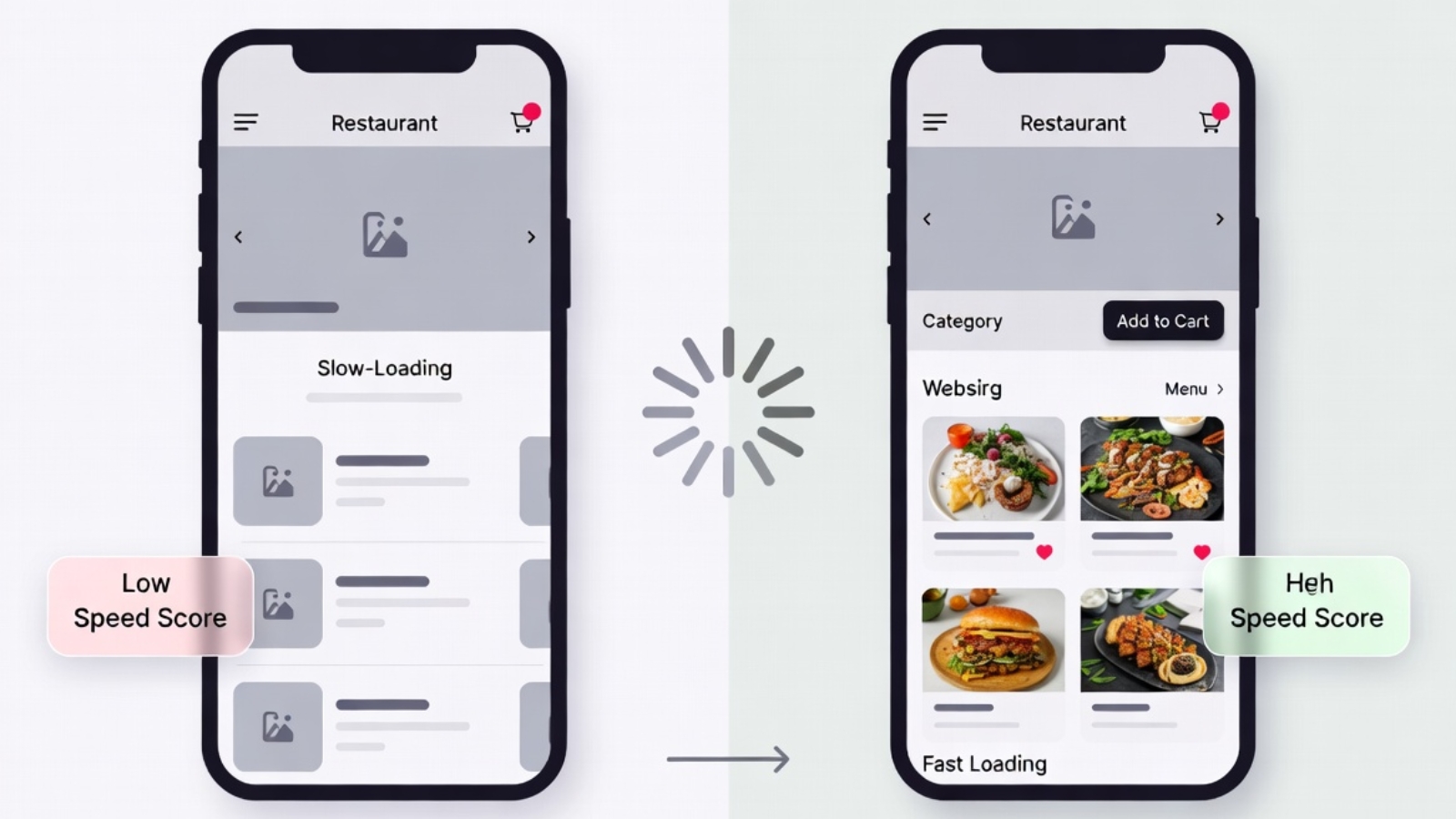
Slow WordPress restaurant website speed test showing poor mobile score before optimization

How to Speed Up a Slow WordPress Restaurant Website

A slow WordPress restaurant website loses you customers before they even see your menu. Studies by Google show that 53% of mobile visitors leave a page that takes longer than 3 seconds to load — and restaurant customers searching for a place to eat are not patient people.

If your WordPress restaurant website feels sluggish, ordering pages take forever to respond, or your Google PageSpeed score is embarrassingly low — this guide covers every real fix, in order of impact. I’ve optimized WordPress restaurant sites for clients across Europe and the Caribbean, so these are hands-on solutions, not theoretical advice.

Start with a baseline score before touching anything. Run your site through Google PageSpeed Insights and GTmetrix — both are free. Screenshot your current scores. You’ll want to compare before and after each fix.

Why Restaurant Websites Are Especially Slow

Restaurant websites have specific speed problems that generic WordPress sites don’t always face.

Food photography is heavy. A single unoptimized hero image of your signature dish can be 4–6MB — enough to tank your entire page load on mobile. Multiply that across a full menu with 40 items and you have a serious problem.

Ordering plugins add weight. WooCommerce plus a restaurant ordering plugin like Orderable loads significantly more JavaScript and CSS than a simple brochure site. Every extra plugin adds to the page weight.

Google Maps embeds are slow. Almost every restaurant site has a map embed — and Google Maps is one of the heaviest third-party scripts you can load on a page.

Third-party ordering widgets add latency. If you’re using FareHarbor, Gloria Food, or any external booking widget, each one makes additional network requests that slow initial page load.

⚠️ Watch Out: Don’t try to fix everything at once. Make one change, test your PageSpeed score, then make the next. If you change ten things simultaneously and something breaks, you won’t know what caused it.

Fix 1 — Compress and Convert All Your Food Photos

This is the single highest-impact fix for almost every restaurant website. Food photos are the #1 cause of slow load times and the easiest problem to fix.

What to do:

Convert every image on your site to WebP format. WebP files are 25–35% smaller than JPEG at the same visual quality — invisible difference to the customer, massive difference to load time.

Use Squoosh.app — it’s free, runs in your browser, and converts images to WebP with a quality slider so you can see the difference before downloading.

Target file sizes:

  • Hero images: under 200KB
  • Menu item photos: under 80KB each
  • Logo: under 30KB

In WordPress, install Smush or ShortPixel — both have free tiers that automatically compress new uploads and bulk-optimize your existing media library.

Enable lazy loading so images below the fold only load as the visitor scrolls down — not all at once when the page first opens. Smush handles this automatically. WordPress also has native lazy loading built in since version 5.5.

✅ Pro Tip: Resize images before uploading, not after. WordPress generates multiple image sizes from every upload — if you upload a 4000px wide photo, WordPress creates five versions of that massive file. Resize to 1200px wide maximum before uploading and you cut the storage and processing load significantly.

Fix 2 — Install a Caching Plugin

Caching stores a static version of your pages so WordPress doesn’t rebuild them from scratch on every visit. For a restaurant site, this alone can cut load time in half.

LiteSpeed Cache (Best Option if on Hostinger)

If your restaurant site runs on Hostinger — which supports LiteSpeed servers natively — install LiteSpeed Cache. It’s free and the most powerful caching plugin available for WordPress because it works directly with the server rather than around it.

After installing, go to LiteSpeed Cache → Presets → apply the recommended preset for WooCommerce sites.

WP Rocket (Best Paid Option)

WP Rocket is the gold standard paid caching plugin at $59/year. It handles page caching, file minification, lazy loading, and database cleanup in one dashboard — without requiring any technical knowledge. Worth it if you’re managing multiple restaurant sites or want a set-and-forget solution.

W3 Total Cache (Free Alternative)

W3 Total Cache is a solid free option if you’re not on a LiteSpeed server and don’t want to pay for WP Rocket. More configuration required than LiteSpeed Cache but very capable.

Fix 3 — Enable a CDN (Content Delivery Network)

A CDN stores copies of your site’s static files (images, CSS, JavaScript) on servers around the world. When a customer visits your site from Denmark, they load files from a nearby server rather than wherever your hosting is physically located — dramatically reducing latency.

Cloudflare free plan is the easiest option. Go to cloudflare.com, add your site, and update your domain’s nameservers to Cloudflare’s. The free plan includes a CDN, basic DDoS protection, and SSL — all relevant for a restaurant site taking online orders.

Hostinger also has a built-in CDN in their hPanel — enable it under your hosting settings if you’re on a Business plan or higher.

✅ Pro Tip: After enabling Cloudflare, go to Cloudflare dashboard → Speed → Optimization → enable Auto Minify for JavaScript, CSS, and HTML. This removes unnecessary whitespace from your code files, reducing their size without any visible change to your site.

Fix 4 — Fix Your Google Maps Embed

Google Maps is one of the heaviest things you can put on a restaurant website — and almost every restaurant has it. A standard Google Maps iframe loads the entire Maps JavaScript API, which can add 500KB–1MB to your page weight.

The fix: lazy load your map.

Replace your standard Google Maps iframe with a click-to-load version. The map shows as a static image initially — only loading the full interactive map when the visitor clicks on it.

Install WP Google Maps or use this simple approach — replace your iframe with a static map image linked to Google Maps:

html

<a href="https://maps.google.com/?q=YOUR+RESTAURANT+ADDRESS" target="_blank">
  <img 
    src="https://maps.googleapis.com/maps/api/staticmap?center=YOUR+ADDRESS&zoom=15&size=600x300&key=YOUR_API_KEY" 
    alt="Restaurant location map — click to open in Google Maps"
    loading="lazy"
  />
</a>

This loads a static image instead of the full Maps JavaScript library — much faster, still shows your location, still links to full Google Maps when clicked.

Fix 5 — Minify CSS and JavaScript

Your WordPress theme and plugins generate a lot of CSS and JavaScript files. Minification removes unnecessary whitespace, comments, and formatting from these files — making them smaller without changing how they work.

LiteSpeed Cache handles this automatically under its CSS/JS settings. WP Rocket does the same. If you’re using W3 Total Cache, enable Minify under the performance settings.

⚠️ Watch Out: Minification occasionally breaks things — especially JavaScript. After enabling it, click through your entire site including the ordering flow. If anything breaks, disable JS minification first (CSS minification is almost always safe).

Fix 6 — Reduce Plugin Bloat

Every active WordPress plugin adds load to your site — some a tiny amount, some a significant amount. Restaurant sites often accumulate plugins over time without anyone reviewing whether they’re all still needed.

Audit your plugins:

  1. Go to Plugins → Installed Plugins
  2. Deactivate any plugin you’re not actively using
  3. Delete deactivated plugins entirely — deactivated plugins still appear in file scans

Test each plugin’s impact:
Install Query Monitor — a free developer plugin that shows exactly how much load time each plugin adds. You might discover one plugin is responsible for 40% of your page load time.

Common restaurant site plugin offenders:

  • Page builder plugins loaded on pages that don’t use them
  • Slider plugins loading JavaScript on every page even when the slider only appears on the homepage
  • Social media feed plugins that make external API calls on every page load

Fix 7 — Optimize Your WooCommerce Database

WooCommerce stores a lot of data — every cart session, every order, every product revision. Over time this bloats your database and slows down queries.

Install WP-Optimize — free plugin that cleans up:

  • Post revisions (WordPress saves a new revision every time you save a post)
  • Expired transients (temporary data WooCommerce stores that builds up over time)
  • Orphaned order data
  • Spam comments

Run a database cleanup once a month. Schedule it to happen automatically overnight so it doesn’t interfere with ordering hours.

✅ Pro Tip: In WooCommerce → Settings → Advanced, limit the number of saved product revisions to 3 or 5. By default WordPress saves unlimited revisions — on a menu with 50+ products that gets updated regularly, this adds up fast.

Fix 8 — Choose Better Hosting

If you’ve done everything above and your site is still slow, the problem might be your hosting. Shared hosting plans at the cheapest tier put hundreds of sites on one server — when other sites on that server get traffic spikes, your restaurant site slows down too.

For a restaurant site taking live orders, consider:

  • Hostinger Business plan — good performance, LiteSpeed server support, reasonable price
  • SiteGround GrowBig — excellent performance, good WooCommerce support
  • Cloudways — managed cloud hosting on DigitalOcean or AWS, more technical to set up but significantly faster than shared hosting

Migrating hosting is the most disruptive fix on this list — do it last, after trying everything else first.

Checking Your Results

After making these fixes, run your site through Google PageSpeed Insights and GTmetrix again. Compare to your baseline scores.

Target scores for a restaurant site:

  • Google PageSpeed Mobile: 70+ (aim for 85+)
  • Google PageSpeed Desktop: 85+
  • GTmetrix Grade: B or higher
  • Fully loaded time: under 3 seconds on mobile

If you’re still under 70 on mobile after all fixes, the problem is almost always unoptimized images or hosting quality.

Common Questions

Q: Will caching break my WooCommerce ordering?
A: Good caching plugins like LiteSpeed Cache and WP Rocket automatically exclude cart, checkout, and account pages from caching. These pages need to be dynamic. Always test your full ordering flow after enabling caching.

Q: My site was fast before, now it’s slow — what changed?
A: The most common causes are a recently added plugin, a large image upload, or a hosting issue. Install Query Monitor and check which queries are slowest. Also check if a new plugin was installed around the time the slowdown started.

Q: Does page speed affect my Google ranking?
A: Yes — Google uses Core Web Vitals (LCP, CLS, FID) as ranking signals, especially on mobile. A faster site ranks better and converts better. Both matter for a restaurant taking online orders.

Q: How often should I check my speed?
A: Run a PageSpeed check once a month and after any major change — new plugin, theme update, or large content addition.

Final Thoughts

Speeding up a WordPress restaurant website comes down to four things done well: compressed images, server-side caching, a CDN, and a lean plugin setup. Fix those four and most restaurant sites go from embarrassingly slow to genuinely fast without touching a line of code.

The order matters — start with images, then caching, then CDN. These three fixes alone will move the needle more than anything else on the list.

If your restaurant website is slow and you’d rather have a developer handle the optimization properly — including WooCommerce performance tuning and hosting migration if needed — Contact me and I’ll get it running fast.

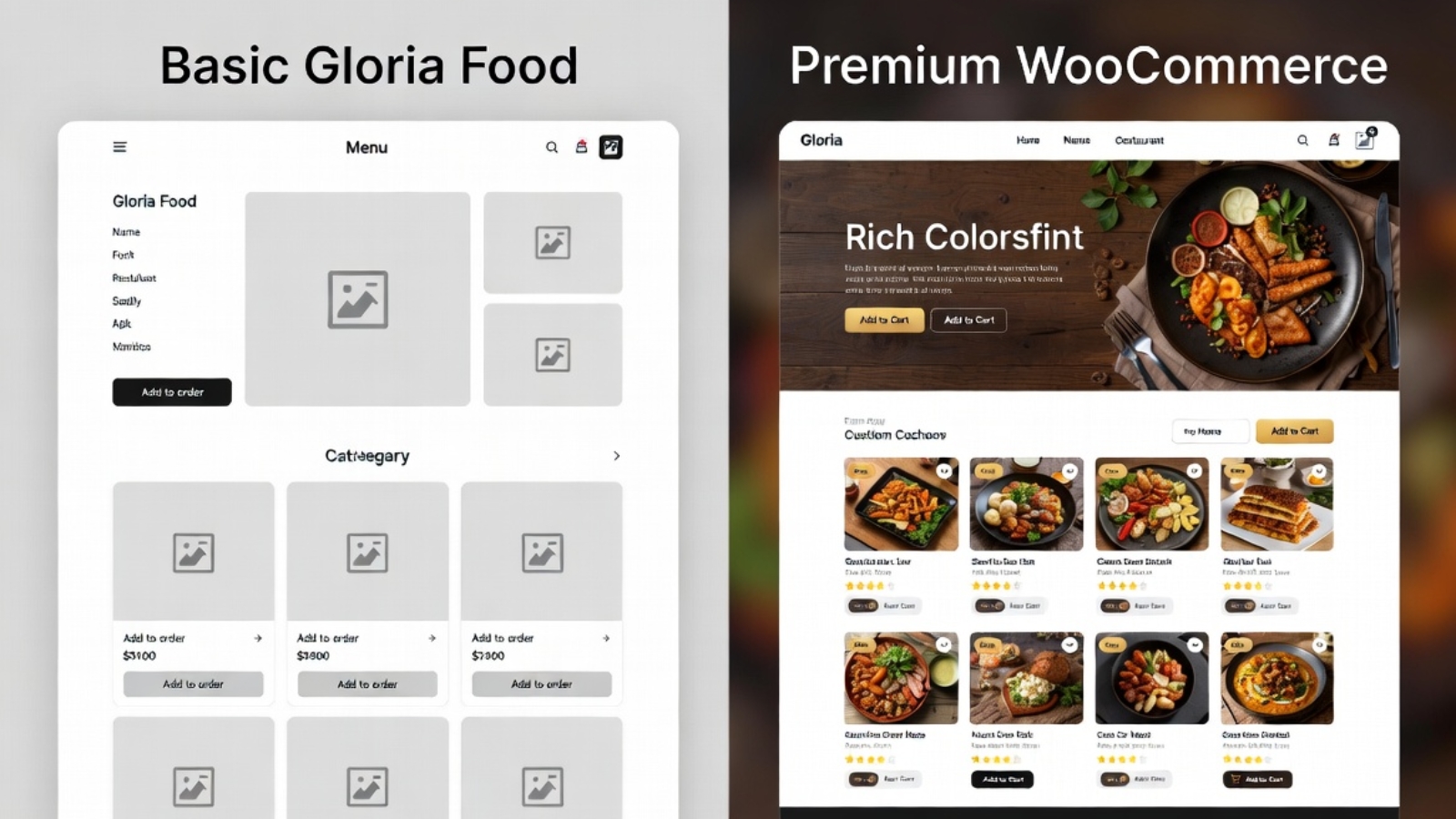
Gloria Food restaurant ordering page vs WooCommerce restaurant website side by side comparison

How to Migrate a Restaurant from Gloria Food to WooCommerce (Step-by-Step Guide)

Table of Contents

  1. Why Restaurants Are Leaving Gloria Food
  2. What You Need Before You Start
  3. Step 1 — Set Up WordPress and WooCommerce
  4. Step 2 — Rebuild Your Menu in WooCommerce
  5. Step 3 — Configure Online Ordering and Delivery
  6. Step 4 — Set Up Payment Gateways
  7. Step 5 — Handle Your Domain and DNS
  8. Step 6 — Go Live and Test Everything
  9. Common Problems and How to Fix Them
  10. Gloria Food vs WooCommerce — Quick Comparison

1. Why Restaurants Are Leaving Gloria Food

Gloria Food was a popular choice for small restaurants when it launched — it was free, quick to set up, and had a decent ordering interface. But over time, restaurant owners started running into the same walls.

The platform was acquired by Oracle in 2021, and since then the free tier has become increasingly limited. Features that used to be free now require paid plans. Customization is almost nonexistent — you get what Gloria Food gives you, and that’s it. Your menu lives on their servers, your customer data is theirs, and if they change their pricing or shut down a feature, you have no control.

The restaurants I worked with in Denmark made the switch for a simple reason: they wanted to own their online ordering system. With WooCommerce, your menu, your customer data, your orders — everything lives on your own WordPress site. You control the design, the fees, the integrations, and the customer experience.

Here’s what you actually gain by switching:

  • Full control over your menu layout and design
  • No platform commission on orders (just payment gateway fees)
  • Your own customer database — build loyalty programs, send emails, run promotions
  • Integration with any payment provider you choose
  • A real website, not just a Gloria Food subdomain

📸 Image 1 Alt text: Gloria Food restaurant ordering page vs WooCommerce restaurant website side by side comparison AI Prompt: Split-screen comparison image showing a basic Gloria Food ordering page on the left (simple white layout, limited branding) versus a fully designed WooCommerce restaurant website on the right (custom colors, logo, beautiful food photos, add to cart buttons). Clean flat design, no people.


2. What You Need Before You Start

Before you touch anything, gather these:

  • Your current Gloria Food menu — take screenshots or export if possible. You’ll be rebuilding this in WooCommerce, so having it documented saves significant time.
  • Your domain name login — you’ll need to update DNS records. Know which registrar controls your domain (GoDaddy, Namecheap, or in the case of Danish restaurants, often Punkt.um or One.com).
  • WordPress hosting — you need a hosting account where WordPress will be installed. Hostinger, SiteGround, or any cPanel host works fine.
  • A list of your payment methods — do you want to accept card online? Cash on delivery? Specific local payment gateways?
  • Your restaurant’s photos — logo, food photos, interior shots. These will make your WooCommerce site look significantly better than Gloria Food ever did.

Pro Tip: Before migrating, keep Gloria Food running in parallel. Don’t shut it down until your WooCommerce site is fully tested and live. Run both simultaneously for at least one week.


3. Step 1 — Set Up WordPress and WooCommerce

Install WordPress

Most hosting providers have a one-click WordPress installer. In Hostinger it’s under hPanel → Websites → Auto Installer. In SiteGround it’s under Site Tools → WordPress installer. Run it, set your admin username and password, and you’re in.

Install WooCommerce

Once inside WordPress:

  1. Go to Plugins → Add New
  2. Search for WooCommerce
  3. Click Install Now → then Activate
  4. WooCommerce will run a setup wizard — go through it and select:
    • Your store location and currency
    • What you’re selling (select Physical products for food items)
    • Payment methods (you can add more later)
    • Shipping (for delivery) or local pickup

Install a Restaurant-Friendly Theme

Your theme controls how your site looks. For restaurants, these free themes work well:

  • Astra — lightweight, fast, works with any page builder
  • Kadence — excellent WooCommerce support out of the box
  • OceanWP — solid free option with restaurant demo sites

If you want a premium look without paying for a theme, use Astra free + Elementor free. This combination gives you full visual control.


4. Step 2 — Rebuild Your Menu in WooCommerce

This is the most time-consuming part, but it’s also where you gain the most control. Every menu item becomes a WooCommerce product.

Set Up Product Categories First

Before adding items, create your menu categories. Go to Products → Categories and add categories that match your menu sections:

  • Starters / Appetizers
  • Pizzas
  • Burgers
  • Pasta
  • Salads
  • Drinks
  • Desserts

Add Menu Items as Products

For each menu item, go to Products → Add New:

  1. Product Name — e.g. “Pepperoni Pizza”
  2. Description — short description of the dish (ingredients, allergens)
  3. Product Image — upload a food photo. This is where WooCommerce destroys Gloria Food — real photos on every item
  4. Price — set the regular price
  5. Product Category — assign to the correct menu section
  6. Product Type — set to Simple Product for standard items

Handling Variations (Size, Extras, Toppings)

This is where WooCommerce gets powerful. For items that come in different sizes or with optional extras, use Variable Products:

  1. In the Product Data panel, change Product Type to Variable product
  2. Go to the Attributes tab
  3. Add attribute: Size → values: Small | Medium | Large
  4. Check “Used for variations”
  5. Go to Variations tab → Generate All Variations
  6. Set individual prices for each variation

For extras and add-ons (extra cheese, extra sauce), install the free plugin WooCommerce Product Add-Ons or use Flexible Checkout Fields.

⚠️ Watch Out: If you have a large menu (50+ items), consider using a bulk product import via CSV. Export your Gloria Food menu data, format it as a WooCommerce-compatible CSV, and import via Products → Import. This can save hours of manual entry.


5. Step 3 — Configure Online Ordering and Delivery

WooCommerce handles ordering natively, but for a restaurant you need to fine-tune a few things.

Install a Restaurant Ordering Plugin

Standard WooCommerce is built for physical product shipping, not food delivery. Install one of these to add restaurant-specific features:

  • Orderable (free tier) — adds time slots, ASAP ordering, minimum order amounts, and a beautiful checkout flow built for restaurants
  • WooCommerce Restaurant Ordering — dedicated plugin for food businesses, adds category-based ordering page

Set Up Delivery Zones

In WooCommerce → Settings → Shipping:

  1. Add a Shipping Zone for your delivery area (e.g. Copenhagen City Center)
  2. Set a flat delivery fee or free delivery above a minimum order
  3. Add a Local Pickup option for customers collecting in person

Set Ordering Hours

With Orderable or similar plugins, you can restrict ordering to your opening hours. This prevents customers from placing orders at 3am when you’re closed.

Minimum Order Amount

Go to WooCommerce → Settings → Minimum Order plugin (or Orderable settings) and set a minimum order value for delivery..


6. Step 4 — Set Up Payment Gateways

This is where Denmark-specific and regional requirements matter. WooCommerce supports almost every payment provider through free plugins.

For Danish Restaurants specifically:

  • MobilePay — install MobilePay WooCommerce plugin (this is essential for Danish customers, almost everyone pays with MobilePay)
  • Stripe — handles Visa, Mastercard, and international cards
  • Cash on Delivery — enable this in WooCommerce → Settings → Payments for cash collection on delivery

For General International Restaurants:

  • Stripe — best all-around choice
  • PayPal — widely trusted
  • Square — good for businesses already using Square POS

Install Stripe for WooCommerce:

  1. Go to Plugins → Add New → search “WooCommerce Stripe Payment Gateway”
  2. Install and activate
  3. Go to WooCommerce → Settings → Payments → Stripe
  4. Enter your Stripe API keys (from your Stripe dashboard)
  5. Enable test mode first, complete a test order, then switch to live

Pro Tip: Always enable at least two payment methods. If Stripe has an outage or a customer’s card fails, they need a fallback option or you lose that order.


7. Step 5 — Handle Your Domain and DNS

This is the step that trips up most people — and it’s where I spent significant time with my Danish restaurant clients, particularly with the Danish registrar Punkt.um.

Understanding What Needs to Change

Your domain is currently pointed to Gloria Food’s servers. To make it point to your new WordPress site, you need to update the DNS records at your domain registrar.

Find Your New Hosting IP Address

In your hosting control panel (Hostinger hPanel, SiteGround, etc.), find your hosting account’s IP address or nameservers. It’ll look like:

  • IP: 185.XXX.XXX.XXX
  • Or nameservers: ns1.hostinger.com / ns2.hostinger.com

Update DNS at Your Registrar

Log in to wherever your domain is registered:

If using nameservers (recommended):

  1. Find the nameserver settings at your registrar
  2. Replace the current nameservers (which point to Gloria Food or their host) with your new hosting nameservers
  3. Save

If updating A records only:

  1. Find the DNS management section
  2. Edit the A record for @ (root domain) — change the IP to your new hosting IP
  3. Edit the A record for www — same new IP
  4. Save

⏱ DNS Propagation

DNS changes take 15 minutes to 48 hours to fully propagate worldwide. During this time your site may be inaccessible or flipping between old and new. This is normal. You can check propagation status at whatsmydns.net.

⚠️ Watch Out — Punkt.um Specific (Danish registrar): Punkt.um’s DNS interface is in Danish and can be confusing. The nameserver field is under “Navneservere” and the A record section is under “DNS-zoner”. If you change nameservers at Punkt.um, it can take up to 48 hours — longer than most registrars. Don’t panic if it takes a full day.


8. Step 6 — Go Live and Test Everything

Before announcing the switch to your customers, run through this complete checklist:

Ordering Test

  • Place a test order for delivery — go through the full checkout flow
  • Place a test order for local pickup
  • Test with each payment method you’ve enabled
  • Check that the order confirmation email arrives and looks correct
  • Log in to WooCommerce → Orders and confirm the test order appears

Menu Check

  • Every item has a photo
  • Prices match your Gloria Food menu exactly
  • Variations (sizes, extras) work correctly
  • Categories display in the right order

Mobile Check

  • Browse the menu on an iPhone (Safari)
  • Add items to cart on mobile
  • Complete checkout on mobile — this is where most customers will order from

Speed Check

  • Run your site through Google PageSpeed Insights
  • Target a score above 70 on mobile
  • If slow: install LiteSpeed Cache (if on Hostinger) or W3 Total Cache

Turn Off Gloria Food Once everything above passes, log in to Gloria Food and either:

  • Set your store to Closed permanently
  • Or delete your Gloria Food account if you no longer need it

Redirect your old Gloria Food ordering URL to your new WooCommerce ordering page if possible.


9. Common Problems and How to Fix Them

Problem: Customers can’t find the ordering page Fix: Add a prominent “Order Now” button to your homepage hero and your navigation menu. Make it a different color from everything else on the page.

Problem: MobilePay isn’t processing Fix: Make sure you’ve completed MobilePay’s business verification. The plugin won’t process live payments until your MobilePay business account is fully verified.

Problem: Orders aren’t sending email notifications Fix: WooCommerce uses WordPress’s built-in mail which often ends up in spam. Install the free WP Mail SMTP plugin and connect it to Gmail SMTP or Brevo (free tier) for reliable email delivery.

Problem: Menu loads slowly Fix: Compress all food photos before uploading. Use Squoosh.app to convert to WebP format and resize to 800×600px maximum. Uncompressed food photos are the #1 cause of slow restaurant websites.

Problem: Delivery area isn’t restricted correctly Fix: In WooCommerce → Shipping, set up Shipping Zones with specific postcodes or regions. Only customers within those zones will see the delivery option at checkout.


10. Gloria Food vs WooCommerce — Quick Comparison

FeatureGloria FoodWooCommerce
Monthly CostFree / Paid tiersFree (hosting cost only)
Commission on OrdersYes (paid plan to remove)No (only payment gateway %)
Custom DesignVery limitedFull control
Own Customer DataNoYes
Menu VariationsBasicAdvanced (unlimited)
Payment OptionsLimited100+ gateways
SEOPoor (subdomain)Full control
Mobile App for OrdersYesVia plugin
Delivery Zone ControlBasicFull postcode control

11. Final Thoughts

Migrating from Gloria Food to WooCommerce isn’t something you do in an afternoon — but it’s absolutely worth it. Once it’s done, you own your entire ordering system. No platform can change their pricing, shut down features, or limit your customization. Your restaurant’s online presence is yours.

The migration for my Danish restaurant clients took approximately 2–3 days of work per site — one day for setup and menu rebuild, one day for payment and ordering configuration, and one day for DNS, testing, and going live.

If you’re a restaurant owner who wants this done professionally — without the DNS headaches, plugin conflicts, or ordering flow bugs — I’ve done this exact migration multiple times and I’m available for freelance projects.

Get in touch at syedaounraza or WhatsApp directly.