
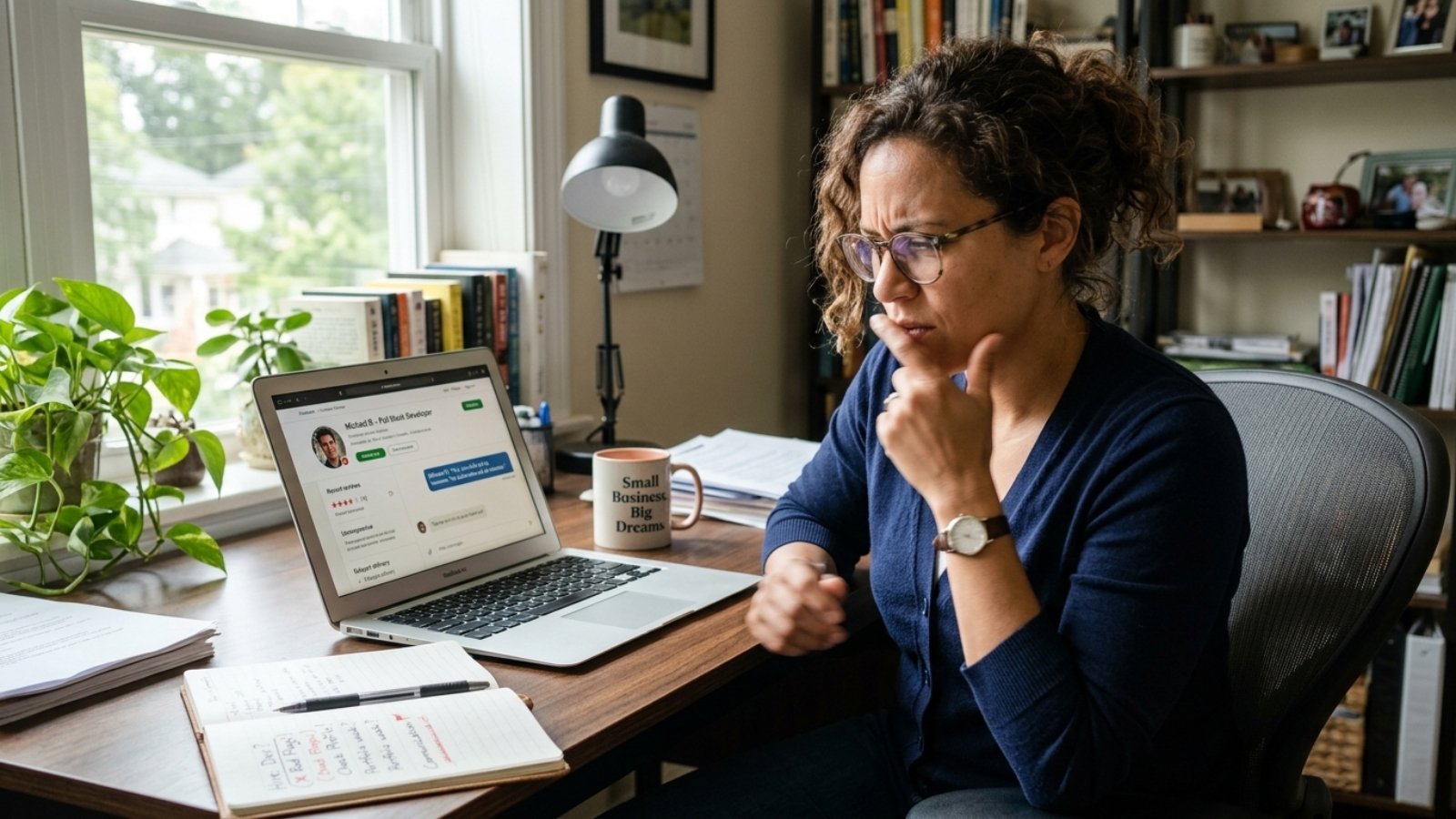
Quick answer: The biggest red flags freelance developer clients should watch for are pressure to pay upfront, requests to move off-platform immediately, no verifiable past work, and rates far below market. None of these alone is proof of a scam, but two or more together should make you pause before paying anything.
I’ve been on both sides of this. I’ve lost bids to scammers underpricing real developers, and I’ve had clients tell me they almost hired someone who vanished after a deposit. The warning signs are usually there. Most people just don’t know what to look for yet.
Why This Matters More in 2026 Than It Used To
Remote hiring has made it easier to work with talented developers anywhere in the world. However, it’s also made impersonation far easier, because verifying someone you’ll never meet in person takes real effort most clients skip.
According to a Better Business Bureau scam alert, scammers routinely steal photos and resumes from real, legitimate freelancers and repost them under fake profiles. That means the portfolio you’re looking at might genuinely belong to a skilled developer, just not the person messaging you.
Upwork’s own platform safety documentation confirms the most common tactics: requests to move payment off-platform, upfront payment demands, and phishing messages disguised as project discussions. That’s why the red flags below matter regardless of which platform or hiring method you use.
Red Flag 1: They Push You to Pay Before Any Work Starts
A legitimate developer will usually agree to milestone payments, or at minimum, a small deposit tied to a defined first deliverable. Someone demanding full payment upfront, before writing a single line of code, is asking you to absorb all the risk.
Red Flag 2: They Want to Move the Conversation Off-Platform Immediately
If you found them through Upwork, Fiverr, or a similar site, and they immediately push to communicate over WhatsApp, email, or a personal payment link instead, that’s worth noticing. Legitimate freelancers sometimes prefer other channels too, but doing it before any trust is established is a common scam tactic specifically because it bypasses the platform’s payment protections.
Red Flag 3: Their Portfolio Can’t Be Verified
Ask for a live link to something they built, not just a screenshot. A real developer can point you to an actual working site or app. Someone who only has static images, or who gets vague when asked which specific parts they built, hasn’t proven anything yet.
Red Flag 4: The Rate Is Far Below Everyone Else’s
A rate that’s dramatically lower than comparable developers isn’t automatically a scam, but it should prompt more scrutiny, not less. Sometimes it means genuinely lower cost of living. Sometimes it means the person behind the profile isn’t who the resume claims.
Red Flag 5: No Real Communication History Before You Hire
A developer worth hiring usually asks clarifying questions about your project before quoting a price. Someone who quotes instantly, without asking what you actually need, is often optimizing for volume, not for getting your specific project right.
Red Flag 6: They Avoid Video Calls or Live Conversation
You don’t need a video call for every project. However, a flat refusal to ever get on one, especially for a larger project, is worth noting. It’s one of the simplest ways to confirm you’re talking to a real person, not a stolen identity.
Red Flag 7: Their Reviews Are All Suspiciously Generic
Genuine client reviews usually mention specific details: a feature built, a deadline hit, a communication style. Reviews that all read like “great work, highly recommend!” with nothing specific can be fabricated, especially in bulk on newer profiles.
The Nuance Most Guides Miss: One Red Flag Isn’t a Verdict
Here’s where I’ll push back on the usual advice. A single red flag rarely means someone’s a scammer. Plenty of excellent developers prefer milestone-heavy contracts, work outside major platforms, or don’t do video calls for cultural or personal reasons.
What actually matters is the pattern. A low rate alone means nothing. A low rate, combined with upfront payment pressure and no verifiable work, means a lot. Judge the combination, not any single signal in isolation.
What to Actually Do Before You Hire
Ask for a live link to a real, working project, not just a portfolio image. Request a short paid test task tied to your actual project instead of a generic sample. Use milestone payments through a platform with built-in protection, at least for the first project together.
If you’re comparing costs across candidates and something seems oddly low or high, it helps to know what a fair rate actually looks like first. My WordPress developer cost breakdown covers realistic 2026 pricing so you can spot an outlier before you commit.
Freelancer or Agency: Does One Carry More Risk Than the Other?
Agencies generally carry less individual-fraud risk, because you’re contracting with a registered business rather than one unverified person. That said, agencies aren’t immune to poor delivery or ghosting either, just usually not identity fraud specifically.
I’ve broken down the real trade-offs, cost differences, and when each option makes more sense in my freelancer vs agency comparison, which covers this decision beyond just risk.
If you want a realistic sense of what your project should cost before requesting quotes, the Free Website Cost Calculator gives you a solid starting range in a couple of minutes.
Frequently Asked Questions
What’s the biggest red flag when hiring a freelance developer?
Pressure to pay in full upfront, before any work has started, is one of the clearest warning signs, since it shifts all financial risk onto you with no completed work to show for it.
Is a very low freelance rate always a scam?
Not always. Lower cost of living in some regions genuinely explains lower rates. However, an unusually low rate combined with other red flags, like upfront payment demands, deserves more scrutiny.
Should I avoid freelancers who don’t do video calls?
Not automatically. Some legitimate freelancers avoid video calls for personal or time-zone reasons. A flat refusal on a larger project, combined with other red flags, is more concerning than the refusal alone.
How can I verify a freelancer’s portfolio is real?
Ask for a live link to a working project rather than screenshots, and ask specific questions about what they personally built. Vague or evasive answers are a warning sign.
Is it safer to hire through Upwork or Fiverr than directly?
Generally yes, at least for a first project. Platforms like Upwork provide escrow payments, identity verification, and dispute resolution that direct hiring doesn’t offer.
What should I do if I already paid a suspected scammer?
Contact your payment provider immediately to dispute the charge, report the profile to the platform you hired through, and file a report with the BBB Scam Tracker or your local consumer protection agency.
Want a Second Opinion Before You Hire?
If you’ve got a quote or a profile that feels off, message me on WhatsApp and I’ll give you an honest read on whether it looks legitimate.