Quick answer: Website development in 2026 typically costs between $1,000 and $15,000 for most small businesses, with basic sites at the low end and custom-featured builds at the high end. WordPress ranges roughly $500–$30,000+ depending on complexity, Wix Studio sites usually fall in a similar low-to-mid range with more predictable bundled pricing, and mobile apps (like Flutter builds) start higher due to backend and platform requirements. The real number depends far more on scope — integrations, e-commerce, custom design, and ongoing maintenance — than on which platform you choose.
If you’ve searched this question and found ranges anywhere from $500 to $500,000, you’re not imagining things — that’s genuinely how wide the market is. This guide breaks down why, using real 2026 market data, so you can budget with actual numbers instead of guesses.
Why “How Much Does a Website Cost” Has No Single Answer
A recent industry-wide survey of over 300 web development firms across 31 countries found that fixed-price web development projects in 2026 range from $1,000 to $150,000 or more, with 63% of agencies quoting between $1,000 and $15,000. That’s the honest starting point: most small business projects land in a fairly predictable band, but the ceiling is genuinely open-ended once you add complexity. YouTube
The same survey found that basic websites and MVPs cost $1,000 to $3,000 for 60% of agencies, with 71% delivering them in under four weeks, while enterprise builds show the widest spread — 36% quote $20,000 to $50,000, and 7% go as high as $200,000 to $500,000. Two businesses can both say “I need a website” and mean completely different projects. YouTube
WordPress Pricing: The Full Range
WordPress remains the most commonly used platform among web development firms — the same 2026 survey found 83% of respondent agencies build on WordPress, far ahead of any competitor. That popularity is exactly why its pricing spans so widely. YouTube
Basic WordPress sites: According to industry pricing data, simple WordPress websites typically cost $500 to $5,000, while fully custom builds with advanced features range from $5,000 to $30,000. Wix
Mid-range custom builds: Looking at the market more broadly, WordPress’s $3,000 to $10,000 modal range reflects its versatility, while complex builds handled by experienced WordPress development companies regularly reach $40,000 or more when custom plugin development, multisite architecture, or advanced editorial workflows are involved. YouTube
What actually drives the price up: One detailed 2026 pricing breakdown notes that the important factor isn’t a flat number but what kind of WordPress site you’re buying and what has to keep working after launch — deeper planning, custom design systems, cleaner development, more QA, migration planning, and long-term support all separate a $5,000 site from a $25,000 one. Omi AI
Maintenance — the cost most people forget: This is where budgets get blindsided. WordPress maintenance through a managed service typically runs $79 to $200 per month for a small business site, with the industry average across major providers landing around $246 per month. That’s an ongoing cost on top of the initial build — and it’s rarely mentioned in the first quote. Wix
For a full breakdown specific to smaller projects, see our WordPress website cost guide for 2026.
Custom WordPress Development: Plugins, Themes, and Integrations
If your project needs something WordPress doesn’t do out of the box — a custom plugin, a fully bespoke theme, or an integration with an external system — pricing shifts into a different bracket entirely. A detailed 2026 custom development pricing guide puts it plainly: custom WordPress development typically ranges from $2,000 to $15,000 or more, depending on whether you need a plugin, theme, or integration, and the level of complexity involved — and vague ranges like “$500 to $50,000” aren’t a budget, they’re a guess. Wix
At the higher end of custom plugin work specifically, plugins with complex logic, custom admin dashboards, or integration with third-party services — like booking systems or custom reporting tools — typically run $4,000 to $6,000 or more. Wix
This is directly relevant if you’re building something like a booking system or an AI-powered feature — these fall squarely into “custom integration” territory, not template pricing.
Wix Studio Pricing: How It Compares
Wix Studio sits in a genuinely different pricing model — instead of piecing together hosting, themes, plugins, and developer hours separately, most of that gets bundled into a plan. This tends to make Wix pricing more predictable upfront, though it comes with less long-term flexibility once you’re locked into the platform’s ecosystem (a tradeoff we cover in detail in our Wix Studio vs WordPress comparison).
For most small-to-medium projects, Wix Studio costs land in a broadly similar range to a mid-tier WordPress build — the real differentiator isn’t raw cost, it’s what you’re trading for that predictability: less control over hosting and long-term portability, in exchange for less maintenance overhead.
Enterprise and Corporate Website Pricing
If you’re planning something bigger — a full corporate site, a lead-generation platform for a mid-market company, or an e-commerce build at scale — the numbers jump substantially. Recent 2026 pricing data shows midmarket and corporate marketing sites typically span $15,000 to $75,000 for a complete project, with a median around $36,500. Wix
E-commerce specifically scales even higher: full custom e-commerce builds on platforms like Shopify Plus, or headless architectures, typically land between $45,000 and $250,000 depending on catalog complexity, ERP integration, and front-end requirements. Wix
Interestingly, even with AI tools now standard across the industry, prices haven’t dropped at this tier. The same data notes AI coding assistants have compressed production timelines by 22 to 34%, yet average project invoices have held steady or increased slightly, because buyers now expect more for the same budget — Core Web Vitals compliance, accessibility standards, and conversion optimization are no longer optional extras. Wix
Mobile App Development: Flutter and Firebase Costs
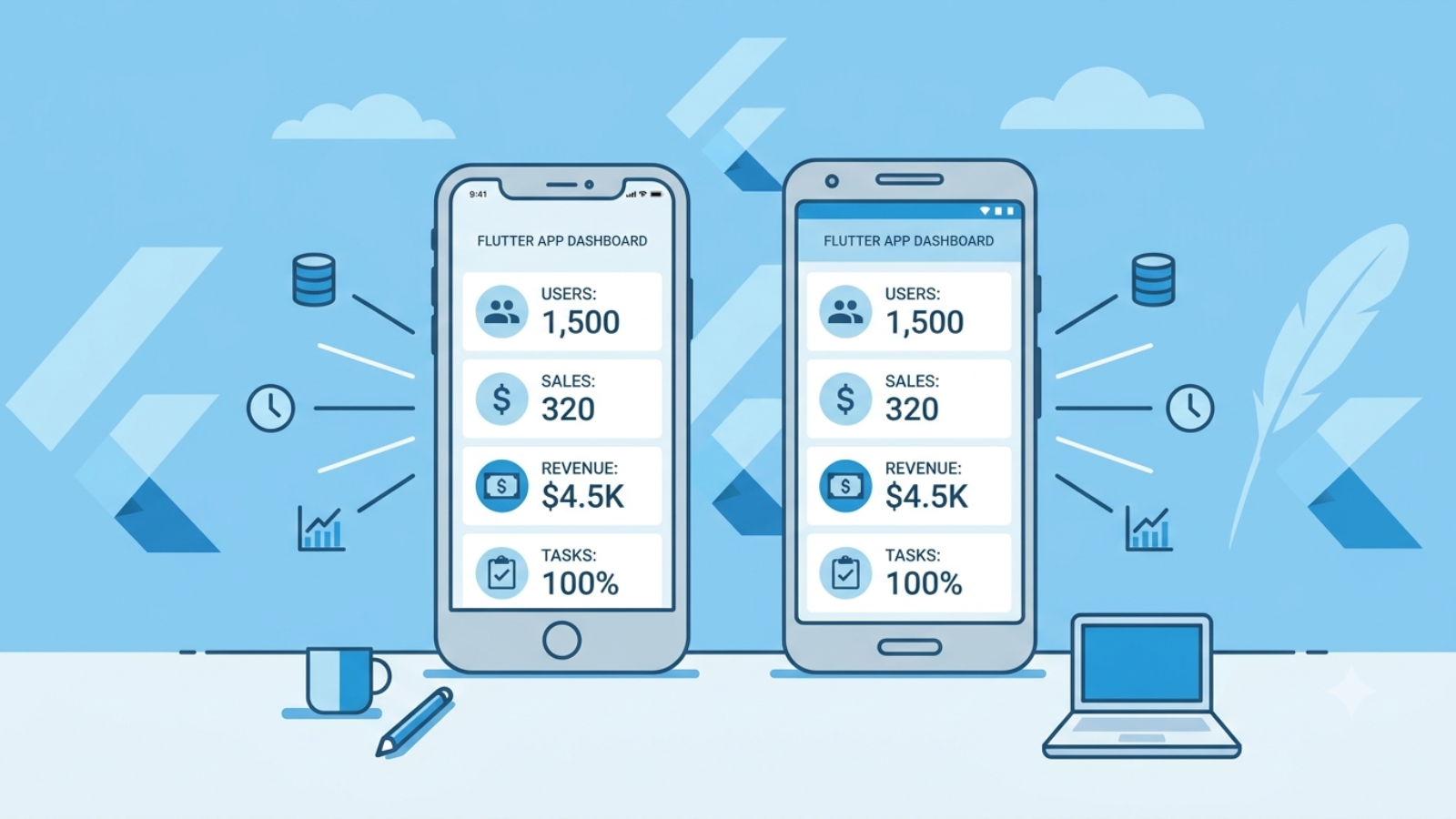
If your project is a mobile app rather than a website, the cost structure shifts again — apps typically involve backend infrastructure (like Firebase) from day one, which websites often don’t need. We cover this in detail in our Flutter app development cost guide, but the short version: a simple MVP app costs meaningfully less than a full-featured app with real-time data, authentication, and payments, and the smartest budgeting approach is scoping your exact feature list before requesting quotes — generic per-app pricing ranges are even less reliable for mobile than they are for websites.
What Actually Pushes Any Project’s Price Up
Across WordPress, Wix, and custom app development, the same cost drivers show up repeatedly:
- Custom design work — Original UX research and bespoke visual design adds real hours, not just template customization
- Content operations — Professional copywriting and image direction is frequently underestimated in a first budget
- Third-party integrations — Payment gateways, CRMs, booking systems, or AI features all add scoped development time
- Technical instrumentation — Analytics, tag management, and search monitoring are increasingly standard but rarely included in the cheapest quotes
- Ongoing maintenance — Security updates, backups, and monitoring are a recurring cost, not a one-time fee
One 2026 industry breakdown puts it simply: the right price for a project is determined more by scope clarity and integration complexity than by which vendor or platform you choose, and spending even a few hours defining scope in detail before requesting proposals typically reduces quoted price variance by 30 to 50%. Wix
How to Get an Accurate Quote (Not a Guess)
Given how widely these numbers swing, the only reliable way to budget is to define your scope before asking for a price. That means listing out:
- Every page or screen your project needs
- Whether you need e-commerce, bookings, or user accounts
- Any third-party integrations (payments, CRMs, booking systems, AI features)
- Whether content and copywriting are included or handled separately
- Your expectations for ongoing maintenance and support after launch
A developer working from that list can give you a scoped, defensible number. A developer working from “how much for a website?” is guessing just as much as you are.
Frequently Asked Questions
Is WordPress cheaper than Wix Studio?
Not necessarily — for comparable small business projects, both land in a similar overall range. The real difference is in what you’re paying for: WordPress offers more long-term flexibility and plugin variety, while Wix bundles hosting and maintenance into more predictable pricing.
Why do WordPress quotes vary so much between freelancers and agencies?
Freelancers typically charge 30–100% less than agencies for comparable scope, since agency pricing includes project management, QA processes, and broader accountability structures that freelancers often don’t carry as overhead.
Does a cheaper website cost more in the long run?
Often, yes — if it lacks proper technical foundations (clean code, security practices, scalable structure), it can require a costly rebuild sooner than a slightly more expensive, properly built site would have.
Is AI making websites cheaper to build in 2026?
For basic sites, yes — AI-assisted tools have compressed timelines and lowered entry-level pricing. For complex, custom, or enterprise builds, overall invoices have held steady or risen slightly, since expectations for quality and functionality have risen alongside the efficiency gains.
What’s the single biggest hidden cost people forget to budget for?
Ongoing maintenance. A website’s launch cost is only part of the picture — hosting, security updates, and content upkeep are recurring costs that should be part of the original budget conversation, not a surprise afterward.
Not sure what your specific project should actually cost? Contact us with your requirements for a scoped, honest estimate — not a generic range.