
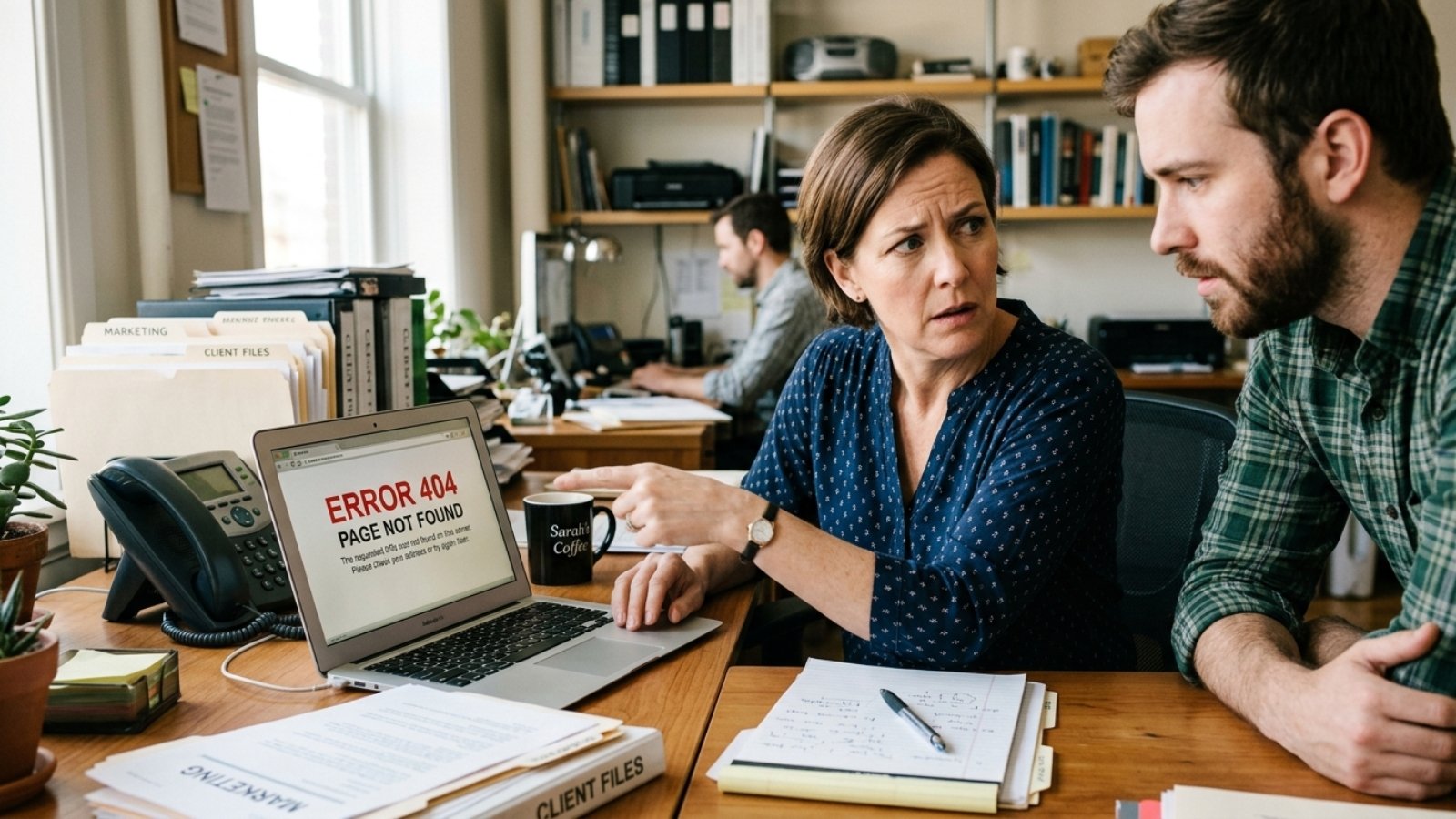
Quick answer: The most common small business website mistakes include skipping SSL security, ignoring mobile design, hiding contact information, using slow hosting, and never checking analytics. Each one quietly costs leads, sales, or search rankings, and most are fixable in a single afternoon without a full rebuild.
I’ve audited enough small business sites to notice a pattern. The mistakes almost never come from bad intentions. They come from a site that was built once, launched, and then never touched again.
How Much Do These Mistakes Actually Cost You?
It’s tempting to treat a website like a one-time expense. However, an outdated or broken site keeps costing you long after launch, through lost leads, lower search rankings, and visitors who quietly bounce to a competitor.
Take SSL certificates as one example. According to W3Techs’ usage data, roughly 87% of websites now use HTTPS by default. That means the remaining sites without it stand out immediately, and not in a good way, because modern browsers actively flag them as “Not Secure.”
That’s just one mistake. Here are the ten I see most often, and what each one is actually costing you.
The 10 Website Mistakes Costing Small Businesses
1. No SSL Certificate
A site without SSL gets flagged by Chrome and other browsers as insecure, right in the address bar. Visitors notice that warning, and many leave before reading a word of your content.
2. Ignoring Mobile Design
More than half of all web traffic now comes from phones. A site that only looks good on desktop is invisible-by-neglect to most of your actual visitors, because Google also uses mobile-first indexing to rank pages.
3. Hidden or Missing Contact Information
If a visitor can’t find your phone number or email within a few seconds, they assume you’re hard to reach, or worse, not a real business. Contact details buried three clicks deep might as well not exist.
4. Slow-Loading Pages
Every extra second of load time pushes visitors toward the back button. Cheap shared hosting and unoptimized images are usually the culprits, and both are fixable without touching your design.
5. No Clear Call to Action
A homepage that explains your business beautifully but never says “Call Now” or “Get a Quote” leaves visitors guessing. Guessing visitors leave. That’s why every page needs one obvious next step.
6. Outdated Plugins and Software
Old WordPress plugins are one of the most common entry points for hackers. The FTC’s small business cybersecurity guidance recommends setting software to update automatically wherever possible, precisely because unpatched software is such a common attack vector.
7. No Analytics Tracking
Without analytics, you’re flying blind. You don’t know which pages convert, where visitors drop off, or which marketing channel actually brings in customers, so you can’t fix what you can’t see.
8. Stale, Unchanged Content
A site that hasn’t been updated in two years signals to both visitors and Google that the business might not be active anymore. Regular updates, even small ones, keep both trust and rankings intact.
9. Weak or Reused Passwords
This one’s boring, but it’s expensive when it goes wrong. A compromised admin login can take down your entire site, and recovery often costs far more than a password manager ever would.
10. No Backup System
Hosting issues, hacks, and human error all happen. Without regular backups, a single bad update or attack can wipe out years of content with no way to restore it quickly.
Which Mistake Should You Fix First?
Not all ten carry equal weight, so prioritizing matters more than fixing everything at once. Security issues — no SSL, outdated plugins, weak passwords, no backups — come first, because a hacked site costs far more to recover than it costs to prevent.
After security, fix whatever’s actively losing you leads: hidden contact info, a missing call to action, or slow load times. These directly affect whether a visitor becomes a customer today, not just whether your site is technically sound.
Content freshness and analytics tracking matter, but they’re slower-burning problems. Fix them once the urgent issues are handled, not before.
The Mistake That’s Rarely on These Lists
Here’s something most “top mistakes” articles skip entirely: building a site that can’t grow with the business. I see this constantly with rigid, template-locked sites that made sense for a five-page brochure but fall apart the moment a business adds services, locations, or an online store.
A site that can’t scale isn’t a mistake you notice on day one. It shows up eighteen months later, when adding a single new page requires rebuilding half the navigation.
If several of these mistakes sound familiar and you’re weighing a patch job against a full rebuild, my earlier breakdown on why websites don’t generate leads covers that decision in more depth. For a rough budget on either path, the Free Website Cost Calculator gives you a realistic number in a couple of minutes.
Frequently Asked Questions
What’s the most common website mistake small businesses make?
Skipping mobile optimization and running without an SSL certificate are the two most common issues, since both directly affect trust, rankings, and how many visitors stay on the site.
Can outdated plugins really get my website hacked?
Yes. Outdated plugins are one of the most frequent entry points for attackers, according to FTC cybersecurity guidance, because known vulnerabilities in old versions often go unpatched.
How often should I update my website content?
Aim for at least small updates every few months. Stale content signals inactivity to both visitors and search engines, which can quietly hurt your rankings over time.
Do I need backups if my hosting company already backs up my site?
It depends on your hosting plan. Many budget hosting plans don’t include automatic backups, so it’s worth confirming directly rather than assuming you’re covered.
Is a slow website really costing me customers?
Yes. Slower load times are consistently linked to higher visitor drop-off, meaning a slow site loses potential customers before they ever see your offer.
Do I need to fix all ten mistakes at once?
No. Security issues like SSL, outdated plugins, and backups should come first, followed by anything actively costing you leads, like hidden contact info or a missing call to action.
Want a Second Opinion on Your Site?
If you’re not sure which of these mistakes apply to your site, message me on WhatsApp and send me the link. I’ll give you a straight, no-pressure read on what’s actually worth fixing first.