
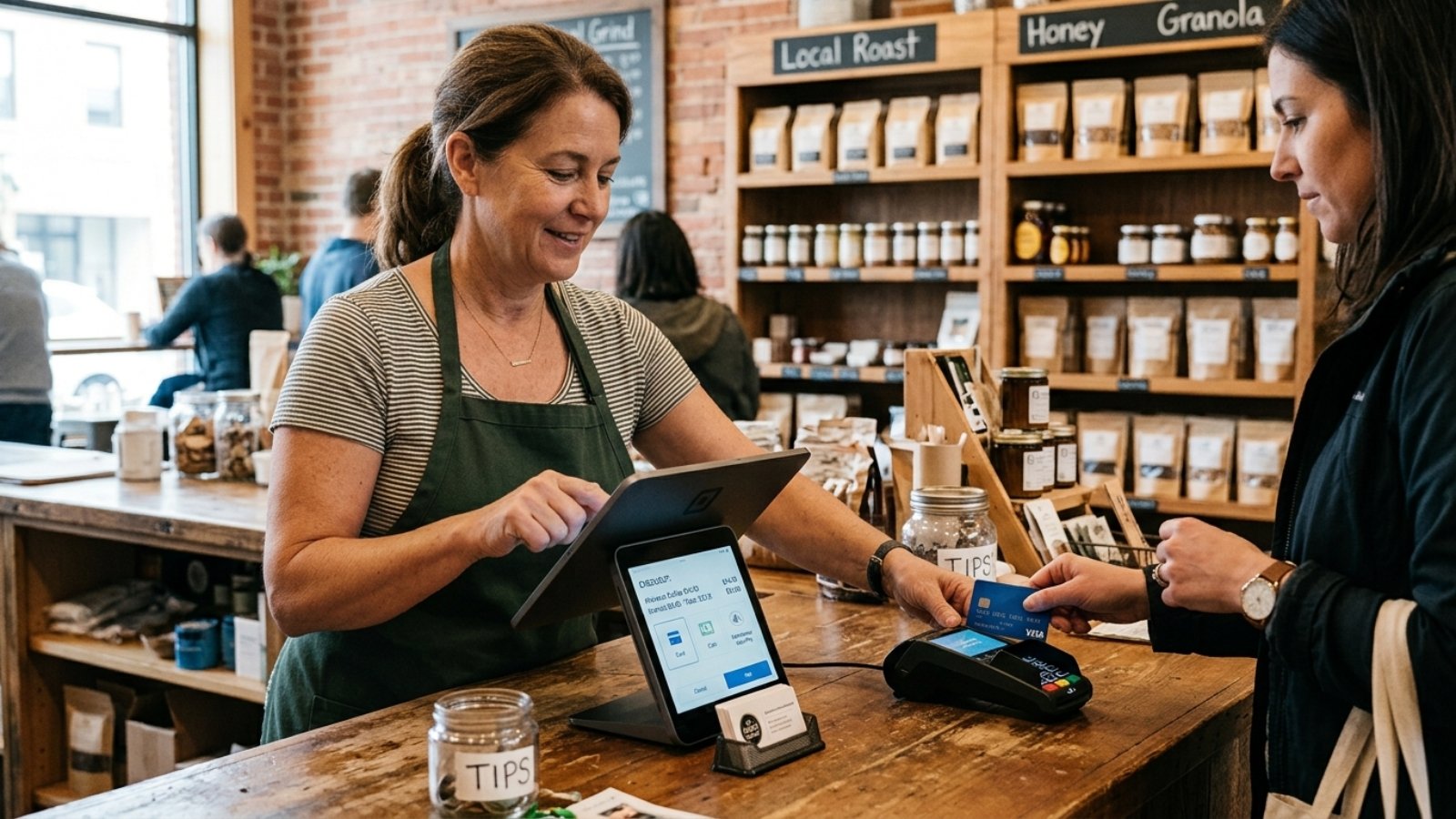
Quick answer: The best payment gateway for most small businesses in 2026 comes down to three realistic options: Stripe (2.9% + 30¢ online), Square (2.6% + 15¢ in-person, 3.3% + 30¢ online), and PayPal (3.49% + 49¢ standard). Stripe fits online-first businesses best, Square wins for in-person and hybrid models, and PayPal adds conversion trust at a higher cost.
I get asked this constantly during builds, usually right after a client has spent an hour comparing homepage marketing copy instead of actual numbers. Here’s the version with real math.
Stripe vs PayPal vs Square: The Actual 2026 Numbers
Let’s start with what each processor actually charges, because the headline percentage rarely tells the full story.
Stripe charges 2.9% plus 30 cents per successful online card charge in the US, according to Stripe’s own pricing page. There’s no setup fee and no monthly fee on the standard plan, which makes it easy to start with and predictable to scale.
Square charges 2.6% plus 15 cents for in-person transactions and 3.3% plus 30 cents for online payments. Square’s real strength is bundling — point-of-sale hardware, inventory, and booking tools all live under one account, which matters if you sell both in person and online.
PayPal charges 3.49% plus 49 cents on its standard plan, noticeably higher than Stripe or Square. PayPal’s Advanced and Pro plans drop closer to 2.59% plus 49 cents, but those require a monthly fee, so the savings only make sense once your volume justifies it.
Why the Headline Rate Isn’t the Real Cost
Here’s the part that trips people up: the fixed fee matters more than the percentage once your average sale gets small. A $15 sale through Stripe costs you 2.9% plus 30 cents, an effective rate closer to 4.9%, not 2.9%.
That’s why a coffee shop or a service business with lots of small transactions feels the fixed fee far more than a business selling $500 packages. If your average ticket is under $30, run the real math for each processor rather than trusting the advertised percentage alone.
International sales add another layer. Stripe adds 1.5% for international cards and 1% more for currency conversion, which can push a routine international sale’s fees close to 5.4% total. If you’re selling to customers outside the US regularly, that stacking cost deserves real attention before you commit to one processor.
Which Gateway Fits Which Business Model?
If your business is primarily online — services, digital products, e-commerce — Stripe usually wins. Its developer-friendly integration works cleanly with WordPress, Wix, and custom builds, and its checkout experience converts well without feeling generic.
If you’re mostly in-person, or hybrid with a physical location plus online orders, Square typically makes more sense. The bundled point-of-sale hardware and inventory tools save you from stitching together separate systems.
PayPal earns its higher cost through brand recognition. Some customers simply trust the PayPal button more, especially for higher-ticket or first-time purchases, and that trust can offset the extra fee through better conversion. It’s not the cheapest option, but it’s not irrational either — it depends on your audience.
Booking Deposits and Payment Gateways: A Different Problem
Booking-based businesses face a wrinkle none of the standard comparisons cover well: partial deposits and no-show fees. Not every gateway handles authorization holds, partial captures, or automatic cancellation charges equally well.
Stripe’s API generally offers the most flexibility here, letting a developer build custom deposit logic, automatic charge triggers on no-shows, and flexible refund rules. Square’s built-in booking tools handle this more simply out of the box, at the cost of some customization. If your business relies heavily on deposits or cancellation fees, that difference should weigh into your decision more than the base transaction rate.
The Mistake I See Most Often
Business owners frequently pick a gateway based on which one they’ve personally used as a customer, rather than which one fits their actual transaction pattern. That’s an understandable instinct, but it’s not the same evaluation.
A $40-average-ticket local service business and a $400-average-ticket consulting firm shouldn’t necessarily use the same processor, even if both owners personally prefer the same checkout button as shoppers. Run your actual numbers — average ticket size, transaction volume, and whether you sell internationally — before choosing.
What I Recommend for Most Small Business Sites
If I’m being direct: Stripe is my default recommendation for most online-first small business builds I work on, because the developer tooling is clean and the fees are predictable. That said, “default” doesn’t mean “always right” — a business with heavy in-person sales genuinely does better with Square’s bundled ecosystem.
The platform you’re building on matters too. If you’re weighing WordPress against Wix for your build, our WordPress vs Wix comparison covers how payment integration differs between the two, since that affects which gateways are easiest to implement cleanly.
Frequently Asked Questions
What’s the best payment gateway for a small online business?
Stripe is generally the best fit for online-first businesses due to its developer-friendly integration, predictable 2.9% + 30¢ pricing, and clean checkout experience.
Is PayPal more expensive than Stripe or Square?
Yes, on PayPal’s standard plan, which charges 3.49% + 49¢ compared to Stripe and Square’s roughly 2.9% + 30¢ rates. PayPal’s higher-tier plans reduce this but require monthly fees.
Which payment gateway is cheapest for small transactions?
Square tends to perform best for small in-person tickets due to its lower fixed fee (2.6% + 15¢), while Stripe’s fixed fee has a bigger relative impact on very small online sales.
Do payment gateways charge extra for international customers?
Yes. Most processors, including Stripe, add roughly 1.5% for international cards plus another 1% for currency conversion, which can meaningfully raise your effective rate.
Should a booking-based business choose a different gateway than a retail store?
Often, yes. Booking businesses benefit from gateways with strong deposit, authorization hold, and no-show fee handling, which varies significantly between Stripe, Square, and PayPal.
Can I use more than one payment gateway on my website?
Yes, and some businesses do, offering both Stripe and PayPal at checkout to capture customers who prefer one over the other. This adds development complexity but can improve conversion.
If you’re not sure which gateway fits your specific setup, that’s a quick conversation before you build anything. Message me on WhatsApp and I’ll help you figure out what actually makes sense for your business.