
“How much will my website cost?” is almost always the first question a business owner asks — and almost always the hardest one to get a straight answer to. Agencies hide pricing behind “request a quote” forms. Freelance marketplaces show wildly different numbers for what looks like the same job. And most pricing guides online are written by agencies trying to upsell you into their most expensive package.
This post breaks down real WordPress website pricing in 2026 — what affects the cost, what you should actually expect to pay for different project types, and where the hidden costs usually hide. I’ve built business sites, e-commerce stores, booking platforms, and bilingual corporate sites for clients across multiple countries, so these numbers reflect real project scopes, not theoretical estimates.
The Short Answer
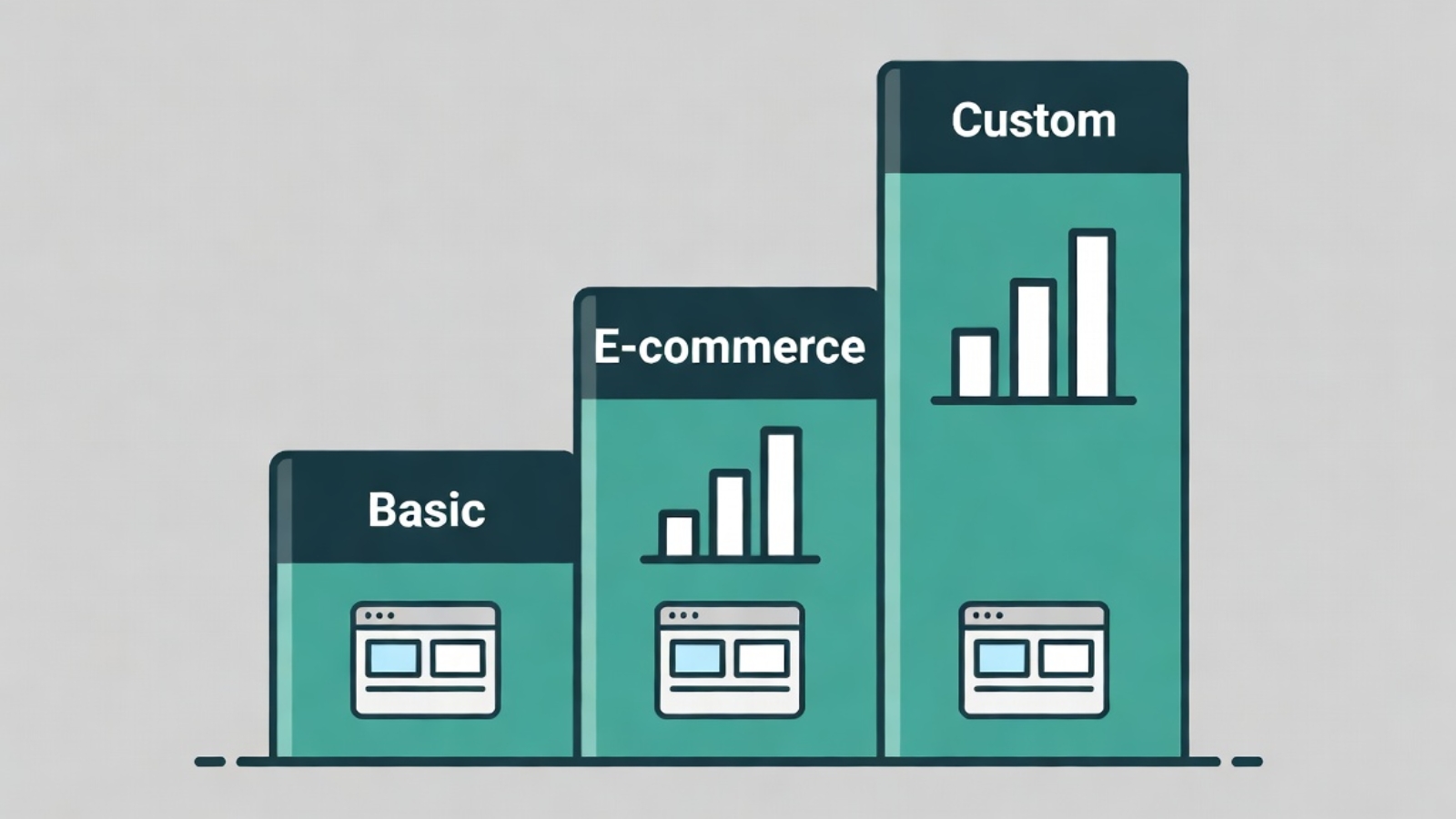
A simple WordPress business website typically costs $400–$1,500. A WooCommerce e-commerce store typically costs $800–$3,500. A custom-functionality site — booking systems, membership portals, multi-language sites — typically runs $1,500–$6,000+, depending on complexity.
These ranges assume freelance pricing, not large agency pricing, which can be 3–5x higher for the same scope of work.
What Actually Determines the Price
The price of a WordPress website isn’t really about “pages” — it’s about complexity, custom functionality, and how much original design and development work is required versus configuration of existing tools.
Factors that increase cost:
- Custom functionality (booking systems, calculators, member areas)
- E-commerce with many products or complex variants
- Multi-language or bilingual sites, especially RTL languages like Arabic
- Custom design (not a pre-built theme) with original layouts
- Third-party integrations (payment gateways, CRMs, booking platforms like FareHarbor)
- Migration from another platform (Wix, Squarespace, Gloria Food, Shopify)
Factors that keep cost down:
- Using a quality pre-built theme with Elementor customization instead of fully custom code
- Standard WooCommerce setup without complex variant logic
- Fewer than 10 pages
- Content (text, images) provided by the client rather than written/sourced by the developer
✅ Pro Tip: The single biggest cost driver is usually content readiness. A client who shows up with finished copy, photos, and a clear sitemap will pay significantly less than one expecting the developer to also write all the content and source all the images — because that’s a separate skill set and a separate time cost.
Real Pricing by Project Type
1. Simple Business / Brochure Website
Typical range: $400–$1,500
A 5–8 page site (Home, About, Services, Contact, maybe a Blog) built on WordPress with Elementor, using a quality theme rather than fully custom design. This covers most restaurants, local service businesses, consultants, and small agencies.
What’s typically included:
- Theme setup and customization to match brand colors/fonts
- Contact form integration
- Basic SEO setup (Yoast, meta titles/descriptions)
- Mobile-responsive design
- Google Maps embed (for local businesses)
What often costs extra:
- Custom illustrations or original graphic design
- Copywriting (if the client doesn’t provide their own text)
- Stock photography licensing or professional photography
2. WooCommerce E-Commerce Store
Typical range: $800–$3,500
This covers everything from a 10-product store to a few hundred products with variants (size, color, material).
What affects price within this range:
- Number of products and complexity of variants
- Payment gateway count (Stripe alone vs. Stripe + PayPal + local options like MobilePay)
- Shipping zone complexity (single country vs. international)
- Whether products need bulk CSV import or manual entry
- Custom checkout flow vs. standard WooCommerce checkout
⚠️ Watch Out: Many cheap e-commerce quotes don’t include payment gateway setup, SSL configuration, or shipping zone configuration as separate cost items — then add them later as “extras.” Always ask for a full scope breakdown before agreeing to a price.
3. Booking / Reservation Websites
Typical range: $1,000–$4,000
This includes integrations like FareHarbor for tourism, custom booking forms, or appointment scheduling systems.
Pricing depends heavily on:
- Whether you’re using an existing booking platform (FareHarbor, Calendly) vs. fully custom booking logic
- Number of services/tours/partners being integrated
- Payment processing requirements
- Calendar sync needs
4. Bilingual / Multi-Language Websites
Typical range: $1,200–$4,000
A site in two languages (e.g. English + Arabic with RTL support) generally costs 40–70% more than the same site in one language, because:
- Every page needs to be built and styled for both reading directions
- Navigation, forms, and buttons need RTL-compatible styling
- Translation management (WPML or Polylang) needs proper configuration
- Content needs to be translated (either by the client or a separate translator)
5. Custom Plugin Development / Unique Functionality
Typical range: $500–$3,000+ per feature
If your project needs something WordPress doesn’t do out of the box — a custom calculator, a unique admin dashboard, an API integration with a third-party system — this is priced separately from the website build itself, usually based on hours.
Freelancer vs. Agency Pricing
| Freelancer | Agency | |
|---|---|---|
| Simple business site | $400–$1,500 | $1,500–$5,000 |
| WooCommerce store | $800–$3,500 | $3,000–$10,000+ |
| Custom booking site | $1,000–$4,000 | $5,000–$15,000+ |
| Communication | Direct with the developer | Through account managers |
| Turnaround | Usually faster | Often slower (more process) |
| Ongoing support | Negotiated separately | Often bundled into retainer |
Agencies aren’t necessarily better — they’re paying for office overhead, project managers, and sales staff, which gets built into your price. A skilled freelancer doing the actual hands-on work can often deliver the same quality for considerably less, with more direct communication.
Hidden Costs to Ask About Upfront
- Hosting — usually $3–$15/month, sometimes excluded from the project quote
- Domain name — around $10–$20/year if you don’t already own one
- SSL certificate — often free through hosting, but confirm
- Premium plugins — some functionality (advanced forms, booking calendars) may require paid plugin licenses, typically $50–$200/year
- Stock photography — if you don’t have your own photos, licensed stock images can add $0–$200 depending on the source
- Post-launch support — does the price include a bug-fix window after launch, or is every change billed separately?
✅ Pro Tip: Always ask “what is NOT included in this price?” before agreeing to a quote. A clear answer to that question tells you more about a developer’s professionalism than the price itself.
How to Get an Accurate Quote
To get a real, accurate price instead of a vague range, be ready to share:
- A list of pages you need
- Any specific functionality (booking, multi-language, e-commerce, integrations)
- Whether you have existing content (text, photos) or need it created
- Your target launch date
- Examples of websites you like (even from competitors)
The more specific you are upfront, the more accurate — and usually lower — your quote will be, because the developer isn’t padding the price to cover unknowns.
Common Questions
Q: Is a $50 website on Fiverr a bad idea?
A: For a genuinely simple single-page site with no custom functionality, it can work. For anything involving e-commerce, custom integrations, or ongoing business use, extremely low prices usually mean template reuse with minimal customization, and little to no post-launch support.
Q: Should I pay monthly or pay upfront?
A: Most freelance web projects are priced as a fixed project fee, often with 50% upfront and 50% on completion. Monthly “website as a service” models exist but often cost more over 12 months than a one-time build with separate hosting.
Q: Does WordPress itself cost money?
A: WordPress software is free and open source. You’re paying for hosting, possibly premium themes/plugins, and the developer’s time to build and configure everything.
Q: How long does a typical project take?
A: A simple business site: 1–2 weeks. A WooCommerce store: 2–4 weeks. A custom booking or multi-language site: 3–6 weeks, depending on complexity and how quickly content is provided.
Final Thoughts
WordPress website pricing varies enormously because “a website” can mean a 5-page brochure site or a fully custom booking platform with three payment gateways and two languages — these are fundamentally different projects with fundamentally different price tags.
The best way to avoid both overpaying and underpaying is to get specific about scope before asking for a price, and to always ask what’s excluded, not just what’s included.
If you’re planning a WordPress project — whether it’s a simple business site, a WooCommerce store, or something with custom booking or bilingual functionality — Contact me and I’ll give you a clear, honest scope and price based on exactly what you need.