
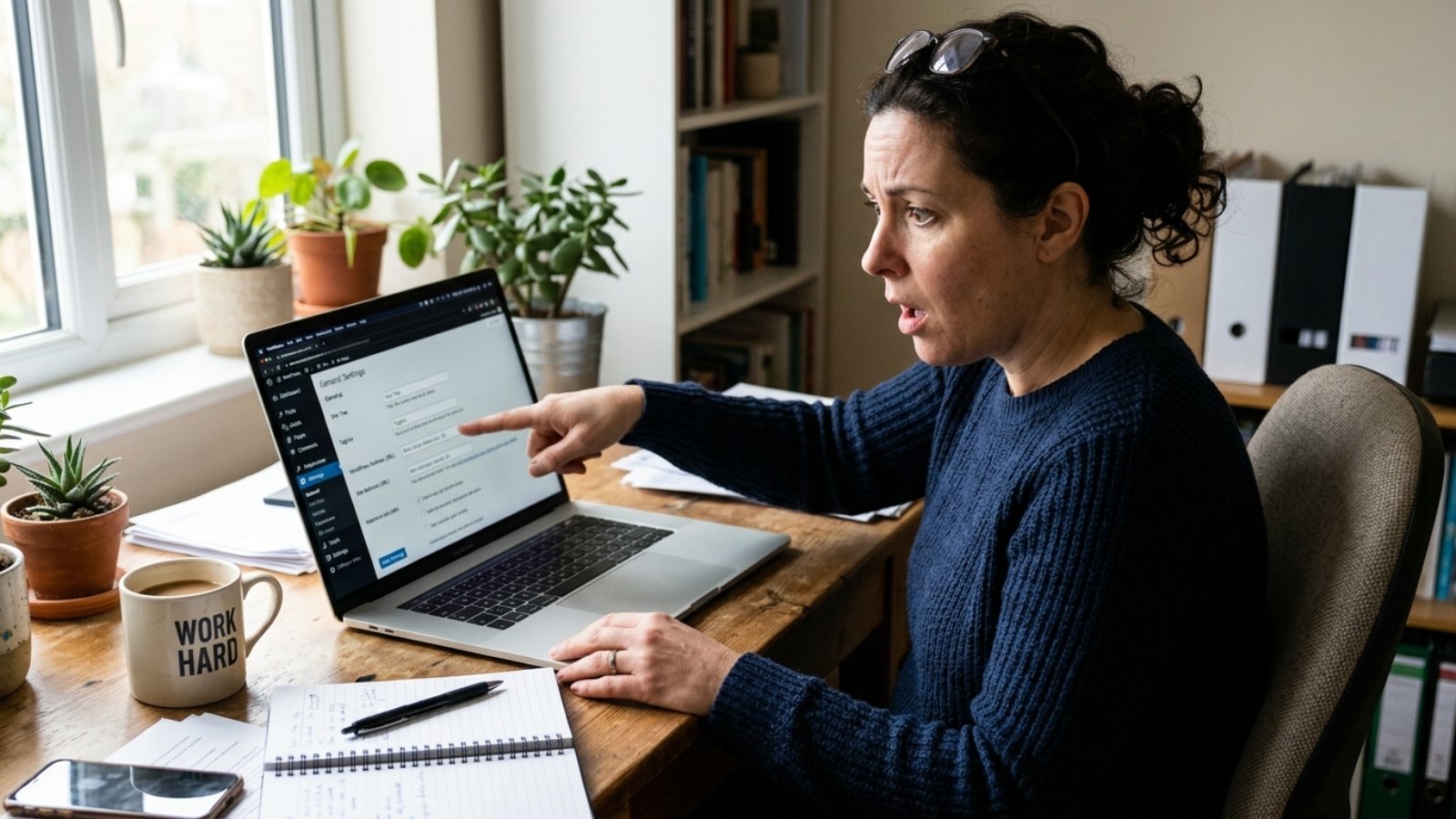
Business owner discovering common WordPress mistakes hurt rankings after checking dashboard settings

Common WordPress Mistakes That Hurt Rankings

Quick answer: Common WordPress mistakes that hurt Google rankings include an accidentally enabled “discourage search engines” setting, bloated plugins slowing load speed, missing image alt text, and thin auto-generated tag pages. Most of these are fixable in under an hour. Left unchecked, they can quietly block rankings for months.

I audit WordPress sites for a living, and the same handful of mistakes show up over and over. What surprises most business owners is how small some of these fixes actually are, once you know exactly where to look.

The One-Click Mistake That Kills Everything Else

Here’s the one I always check first, because it makes every other SEO effort pointless if it’s on. In your WordPress dashboard, go to Settings, then Reading. There’s a checkbox labeled “Discourage search engines from indexing this site.”

If that box is checked, WordPress tells Google not to index your site at all, according to WordPress.org’s own support documentation. It’s meant for staging sites during development. However, it gets left checked after launch far more often than you’d expect, sometimes flipped back on accidentally by a plugin update.

If your traffic mysteriously dropped to zero, or never started, check this box first. It’s a thirty-second fix that undoes months of invisible damage.

Mistake 2: Too Many Plugins Slowing Everything Down

Each plugin adds code your site loads on every visit, whether or not you actually use its features. A site running fifteen plugins for functions covered by three or four almost always loads slower than it should.

Page speed is a confirmed ranking factor, according to Google’s official SEO starter guide. That bloat directly costs you rankings, not just user experience. Audit your plugin list regularly and remove anything you can’t clearly justify keeping.

Mistake 3: Missing or Lazy Image Alt Text

Alt text describes an image for search engines and for visitors using screen readers. Leaving it blank, or filling it with generic filler like “image1.jpg,” wastes a genuine, easy ranking opportunity. This matters especially for businesses that rely on image search traffic.

This one takes minutes to fix retroactively. Go through your most important pages and add a short, honest description of each image. Include relevant keywords naturally where they actually fit.

Mistake 4: Thin, Auto-Generated Tag and Category Pages

WordPress automatically creates archive pages for every tag and category you use. If you’ve tagged loosely over the years, you likely have dozens of near-empty pages Google sees as thin, low-value content.

Keep your categories focused, ideally 8-12 broad topics, and use tags sparingly for specifics rather than treating them interchangeably. Too many overlapping tags and categories confuse both visitors and search engines about your site’s actual structure.

Mistake 5: Broken or Sloppy Permalink Structure

Permalinks are your page URLs. Changing them after a site has been indexed can quietly tank existing rankings if redirects aren’t set up correctly. A URL structure like yoursite.com/?p=123 also tells search engines and visitors nothing about the page’s actual content.

Use a clean, descriptive permalink structure from the start. If you ever do need to change it, make sure old URLs redirect properly to their new locations first.

Mistake 6: No Mobile Optimization Despite a “Responsive” Theme

A theme labeled responsive doesn’t automatically mean it performs well on mobile. Test your actual pages on a real phone, not just a resized browser window. Text size, tap target spacing, and image loading often behave differently than expected.

Google evaluates your mobile version as the primary version of your site for ranking purposes. That’s why a poor mobile experience directly limits how well you can rank, regardless of how polished your desktop version looks.

Mistake 7: Skipping HTTPS or Letting the Certificate Lapse

An expired or missing SSL certificate triggers browser security warnings that scare visitors away before they read a word of your content. Beyond the trust issue, HTTPS itself factors into how search engines evaluate your site’s security posture.

Most hosting providers now offer free SSL certificates through Let’s Encrypt or similar services. If your site still shows “Not Secure” in the browser bar, this is one of the fastest fixes on this entire list.

Which of These Mistakes Should You Fix First?

Not every mistake here carries equal weight, so prioritizing matters. The “discourage search engines” setting comes first, always, because it makes every other fix meaningless while it’s active. Check it before touching anything else on this list.

After that, page speed issues, plugin bloat, uncompressed images, poor hosting, have the broadest impact across rankings, user experience, and conversion rates simultaneously. Alt text, permalink cleanup, and tag pruning matter too, but they’re slower-burning problems worth tackling once the urgent issues are resolved.

I’ve covered the broader ranking diagnosis process, beyond just WordPress-specific issues, in more detail in why your website isn’t ranking on Google, worth reading alongside this checklist if you’re troubleshooting from scratch.

The Nuance Most Guides Skip: Plugins Aren’t the Enemy, Bad Choices Are

Here’s my honest take. I’ve seen articles blame “too many plugins” as if plugin count alone is the problem. It isn’t, not directly. A site running twenty well-coded, actively maintained plugins can outperform a site running five poorly built ones.

The real issue is unmaintained plugins, abandoned by their developers, never updated, quietly conflicting with WordPress core updates. Audit for quality and necessity, not just raw plugin count, and you’ll fix the actual problem instead of removing tools you genuinely need.

This overlaps with a broader question worth asking before you hire anyone to fix these issues: does your developer actually understand current WordPress standards? I’ve covered what separates a genuinely current developer from an outdated one in what a good WordPress developer should know in 2026.

Frequently Asked Questions

What is the most damaging WordPress mistake for SEO?
The “discourage search engines from indexing this site” setting under Settings > Reading is the most damaging, since it can block your entire site from Google regardless of how well everything else is optimized.

Do too many WordPress plugins really hurt SEO?
Indirectly, yes. Excessive or poorly maintained plugins slow page speed, which is a confirmed Google ranking factor, and can create conflicts that break other functionality.

How do I check if my WordPress site is accidentally hidden from Google?
Check Settings > Reading for the “Discourage search engines” checkbox, and search site:yourdomain.com on Google to confirm your pages are actually indexed.

Does missing image alt text actually affect rankings?
Yes. Alt text helps search engines understand image content and can contribute to image search visibility, often an overlooked traffic source for businesses.

Can changing my WordPress permalink structure hurt my SEO?
Yes, if done without proper redirects. Changing URLs after a site is indexed without redirecting old URLs to new ones can cause a sudden drop in existing rankings.

Is my responsive WordPress theme automatically mobile-friendly for SEO?
Not necessarily. Test actual pages on a real mobile device, since text size, spacing, and load behavior can differ from what “responsive” theme labeling suggests.

Want a Real Audit Instead of Guessing?

If you’re not sure which of these mistakes apply to your site, message me on WhatsApp and send me your link. I’ll give you a straight read on what’s actually holding your rankings back.
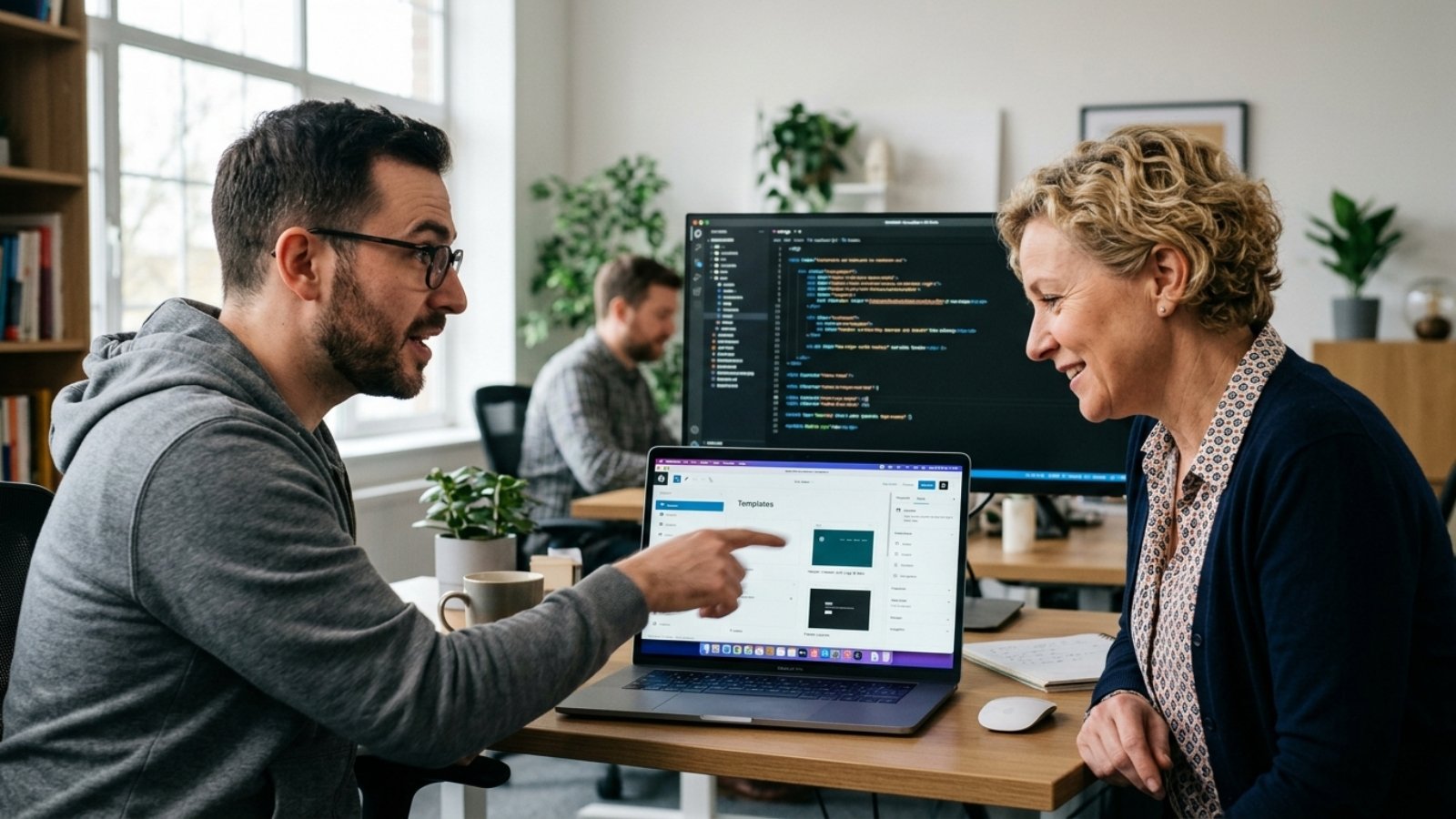
Developer explaining block themes to a client while demonstrating what a good WordPress developer should know in 2026

What a Good WordPress Developer Should Know in 2026

Quick answer: A good WordPress developer in 2026 knows PHP, block themes and Full Site Editing, basic security hardening, and performance optimization, not just how to install plugins. If a candidate only knows classic PHP themes and page builders, they’re working with tools that WordPress itself has already moved past.

WordPress has changed more in the last three years than in the decade before it. That matters directly for hiring, because the skills that made someone a solid developer in 2020 don’t automatically make them one now.

Why This List Looks Different Than It Would Have a Few Years Ago

The biggest shift is Full Site Editing, or FSE. According to WordPress.org’s official documentation, block themes now handle every part of a site, headers, footers, navigation, entirely through blocks, rather than requiring PHP template files for structural changes.

That’s not a minor feature update. It changes how a competent developer actually builds a site day to day. A developer who’s never touched block themes or the Site Editor is working with an outdated toolkit, even if they’re technically still writing valid WordPress code.

Core Skill 1: PHP, Still, Just Applied Differently

PHP hasn’t disappeared. Business logic, custom post types, and REST API endpoints still run through it. However, the days of editing raw PHP template files for every visual change are fading fast, since block themes now handle that layer through HTML and block markup instead.

A good developer today knows when PHP is actually necessary versus when the block editor already solves the problem. Someone who defaults to custom PHP for tasks the Site Editor handles natively is often working harder than the job requires.

Core Skill 2: Genuine Comfort With Block Themes and the Site Editor

Ask a candidate to explain the difference between a block theme and a classic theme. A developer with real 2026 experience answers this without hesitation, because it’s become the default way WordPress themes are structured now.

They should also understand theme.json, the configuration file controlling global styles, colors, and typography across block themes. A developer unfamiliar with theme.json is likely still building the way WordPress worked several versions ago.

Core Skill 3: Security as a Baseline, Not an Afterthought

Outdated plugins remain one of the most common ways WordPress sites get compromised. A good developer keeps plugins updated deliberately, uses strong authentication practices, and avoids installing unnecessary plugins that widen your site’s attack surface.

This isn’t advanced knowledge. It’s baseline hygiene that separates developers who think about your site’s long-term health from those who only care about getting it launched.

Core Skill 4: Performance Optimization Beyond “Install a Caching Plugin”

Real performance work means understanding what’s actually slowing a site down: unoptimized images, excessive plugin bloat, poor hosting, or render-blocking scripts. A developer who reaches for a caching plugin as the only fix, without diagnosing the actual bottleneck, is treating a symptom rather than the cause.

Block themes genuinely help here. A clean block theme typically ships with far less JavaScript than a heavy page-builder site, which is one practical reason experienced developers have shifted toward them for new projects.

Core Skill 5: WooCommerce Fundamentals, Even for Non-Store Projects

Not every project involves e-commerce, but a good WordPress developer should still understand WooCommerce’s basics, since many clients eventually want to add a store, even if they don’t need one on day one. A developer who’s never touched WooCommerce may struggle to plan a site’s structure for that future possibility.

If your project specifically involves a store, the skill bar goes considerably higher. I’ve covered exactly what to check for in that scenario in what to look for in a WooCommerce developer.

Core Skill 6: Clear Communication, Not Just Technical Skill

Here’s something that rarely makes these lists but matters enormously in practice. A developer who can explain a technical trade-off in plain language, why a feature will slow the site, why a shortcut now creates problems later, saves you from making uninformed decisions about your own project.

Technical skill without communication just means you’ll get surprised later by decisions you never understood. Ask candidates to explain something technical to you directly during the hiring process, and pay attention to whether the explanation actually lands.

The Red Flag Most Clients Miss: Still Only Building Classic PHP Themes

Here’s my honest opinion. A developer who’s never built anything on a block theme, and still relies entirely on classic PHP templates and heavy page builders for every project, isn’t necessarily bad. But they are behind where the ecosystem has moved, and that gap tends to show up later as slower sites, harder content editing, and features that take longer to build than they should.

This doesn’t mean page builders like Elementor are automatically wrong. Plenty of solid developers still use them well for specific project needs. The red flag is a developer who’s unaware block themes exist as an option at all, not one who’s made an informed choice between approaches.

If you’re vetting candidates generally, not just for technical currency, it’s worth reviewing broader hiring risks too. I’ve covered those in more detail in red flags to watch for when hiring a freelance developer.

How Does This Affect What You Should Budget?

Developers current on block themes, FSE, and modern performance practices often charge similarly to developers using older approaches, since pricing tracks experience more than specific tooling. However, the value difference shows up later, in a site that’s faster, easier to update, and less prone to plugin conflicts.

I’ve broken down realistic 2026 pricing across experience levels in my WordPress developer cost guide, which is worth reviewing alongside this checklist before you finalize a hire.

Frequently Asked Questions

What’s the most important skill for a WordPress developer to have in 2026?
Comfort with block themes and Full Site Editing is the biggest differentiator now, since it’s become the standard way WordPress sites are structured and edited.

Is PHP still necessary for WordPress development?
Yes. PHP still handles business logic, custom functionality, and REST API work, even though block themes have shifted much of the visual template layer away from PHP files.

Should I avoid a developer who only uses page builders like Elementor?
Not necessarily. Page builders remain useful for specific projects. The concern is a developer who’s unaware of block themes as an alternative, rather than one who’s made an informed choice.

Does a good WordPress developer need WooCommerce experience?
At least basic familiarity, yes, since many sites eventually add e-commerce features. Deep WooCommerce expertise matters most specifically for store-focused projects.

How can I tell if a developer’s skills are current for 2026?
Ask them to explain the difference between block themes and classic themes, or what theme.json does. A developer with current experience answers this comfortably.

Does hiring a more current developer cost more?
Not necessarily. Pricing tracks overall experience more than specific tooling, though a developer skilled in modern practices often delivers a faster, more maintainable site for the same rate.

Want a Developer Who’s Current on Modern WordPress?

If you’re planning a project and want it built on the current WordPress standard, not outdated tooling, message me on WhatsApp and tell me what you need. I’ll give you a straight read on the right approach.